

How I Got 2.3 Million App Downloads Without Spending a Cent on Marketing
Published 2nd September, 2026 by Stuart Hall I originally published this article in 2015. It tells the story of my App Store experiment, where I built and launched the 7 Minute Workout app and grew it to 2.3 million downloads without spending money on marketing. We're republishing the original story because it remains one of Appbot's most-read experiments in organic app growth. While the App Store has changed considerably since then, the experiment also demonstrates something that remains important today. Paying attention to what users say in their app reviews can help developers identify problems, prioritise improvements and build a better product. The experiment didn't end at 2.3 million downloads. I later got the app back and continued documenting what happened as I experimented with App Store optimisation, pricing, ratings, product changes and subscriptions. You'll find the follow-up articles at the end of this post.
 What we cover:
- Part 1: The experiment begins
- Part 2: In-app purchases and listening to users
- Part 3: Doing nothing, and an Apple feature
- Part 4: More IAPs and "All The Things"
- Part 5: The finale with HealthKit, getting featured and an acquisition
- What happened after 2.3 million app downloads?
- Thirteen years later
Turn your app reviews into a product roadmap
The 7 Minute Workout experiment grew on user feedback. Join over 25% of the Fortune 100 and 35% of the top charting app developers using Appbot to analyze their reviews.
Try Appbot free for 14 days →Part 1: The experiment begins
I've tried to write this blog post a few times. The essence of the post was always going to be this.
- How important it is to create a story around your product.
- How the actual coding takes a back seat.
- How hard it is to market your app.
Two things inspired me to commit to finishing this blog post.
- Reading an advance copy of The Fortune Cookie Principle, the 20 keys to a great brand story and why your business needs one. You must read this book.
- Reading advice from the One More Thing conference about how to write a press release.
Is that really all journalists and reviewers want? I wanted to find out. I wondered what would happen if you made an app in a few hours, stuck it in the App Store and didn't bother telling anyone? So I tried it out.
The idea
When I set out on this experiment the 7 Minute Workout was getting a lot of press (if you're interested in the underlying research and history, check this paper). Everyone else on Hacker News seemed to be building an app for it and I was doing the workout as a way to start exercising (boy do I need it). Using the existing web apps my iPhone would lock in the middle of the workout, which I found frustrating, and I wanted a decent native solution.
I had a couple of key goals for the app.
- Explaining the 12 exercises (I had been digging around in Google, I had no idea what a plank was).
- Adding a voice-prompted timer for when it was time to swap exercises and to tell you what was up next.
Many other ideas and features ran through my head, including iPad support, adjustable durations, randomised exercises, adjustable repeats and sets, a log book and social sharing. Given a short time frame all this had to be cut (for now).
The build
So I sat down at 7pm one night with the aim of having the app submitted for review by 12am. Five hours of hacking is actually my idea of fun.
Five hours later I emerged with a couple of screens (dynamically filled with different data) and some text to speech. I'm no designer so there were no graphics, all flat views, thanks in most part to the awesome FlatUIKit.
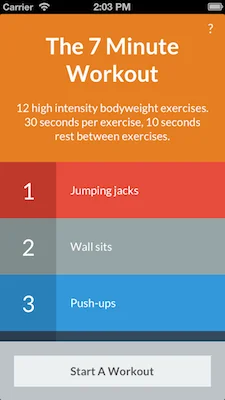
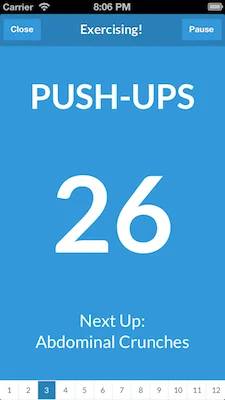
Another hour (yep I went over) was spent throwing together an icon (again a flat colour with the number 7, as my design skills are limited) taking some screenshots and writing up a basic description.
I was amazed that the name "7 Minute Workout" was still available. I assumed there were other apps waiting for review. I was right.
Built and submitted in 6 hours. The wait begins.
Version 1 approval
After 6 days and a couple of minutes review time it was approved. Nobody else knew I had made it (I didn't even tell my wife).
By this time there were several other 7 Minute Workout apps in the store. So the aim in the first week was to just let it run without telling anyone and to make no attempt to get press.
I was expecting very little, but was surprised to see that it actually sold a few copies with a steady rank.
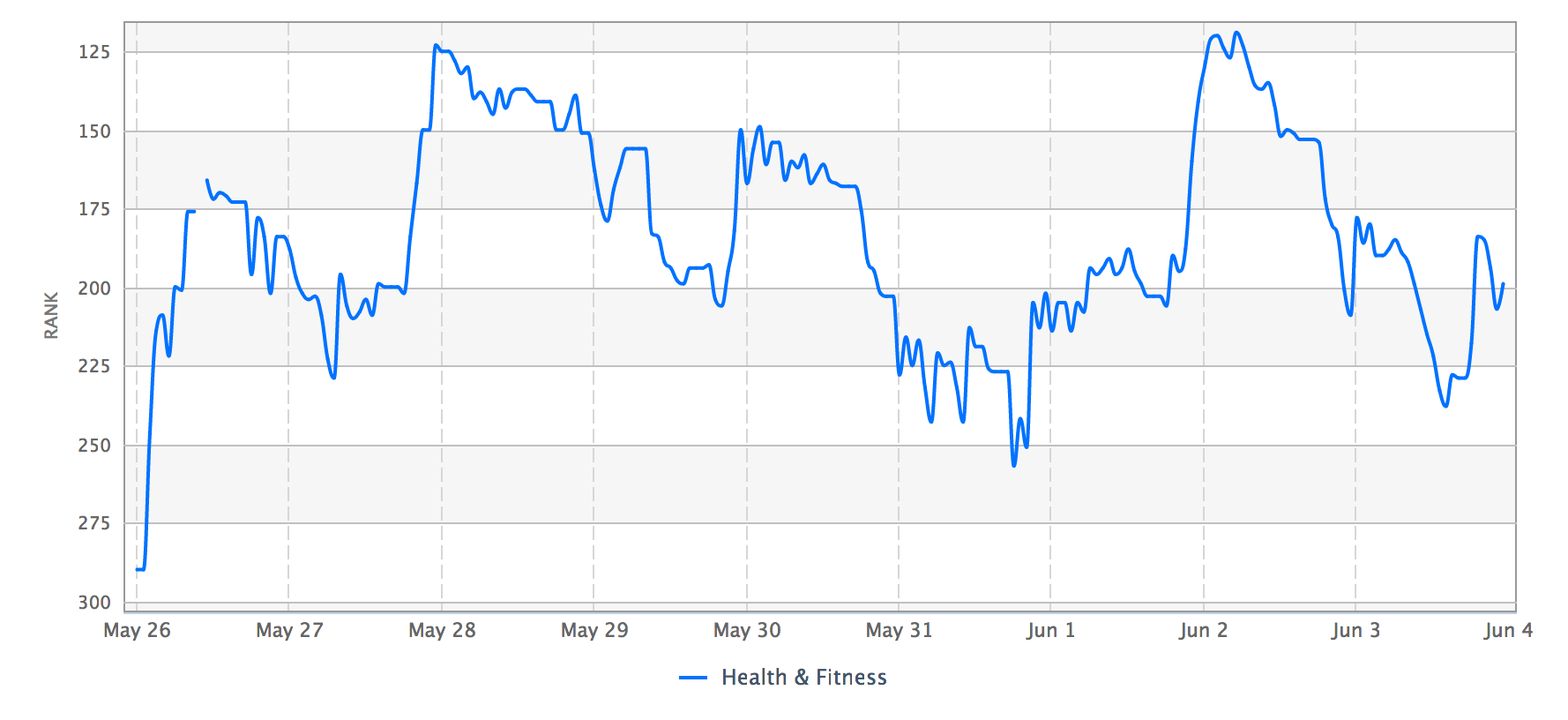
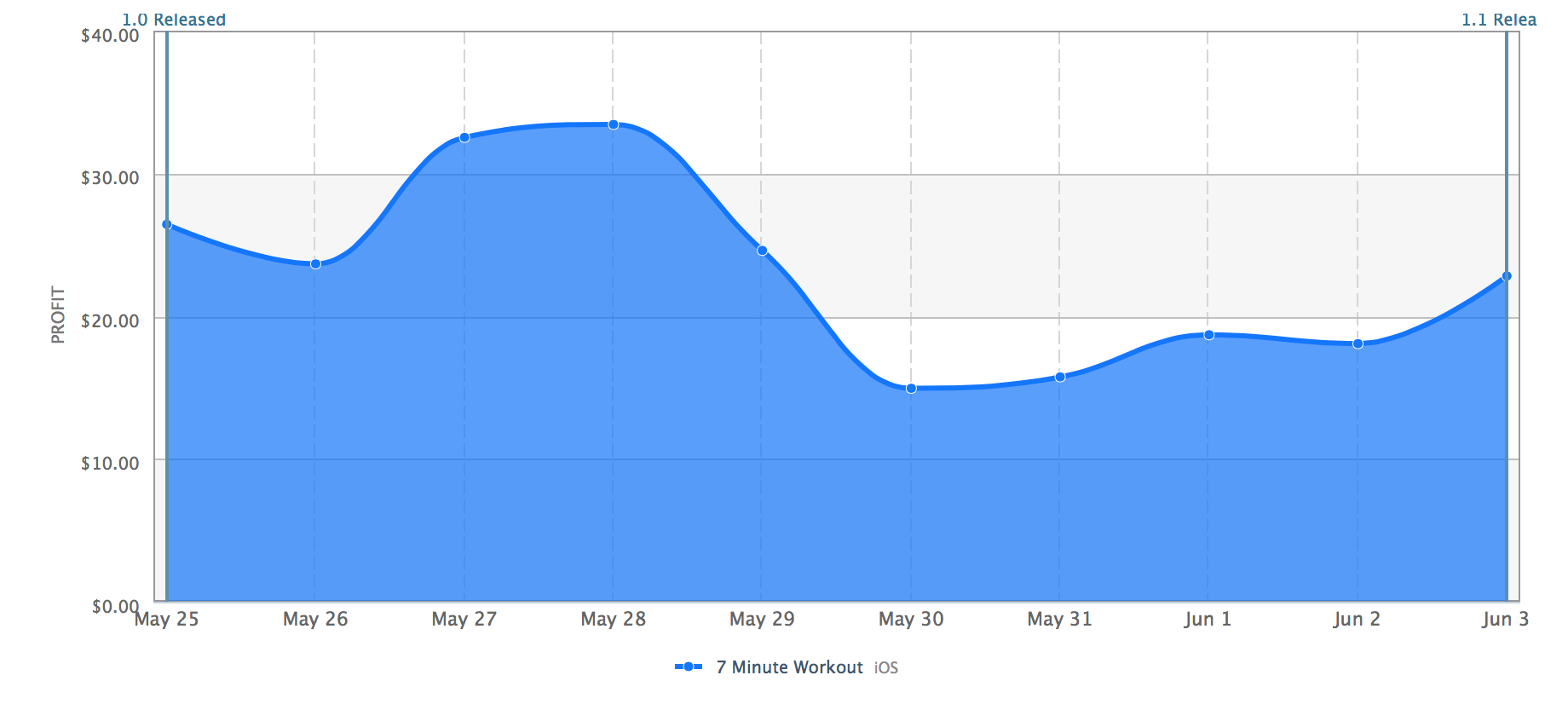
Nothing world changing, but still not bad when relying 100% on people discovering it via the App Store.
Version 1.1 and marketing
So version 1.1 was all about marketing. I added social sharing when a workout was completed (Twitter, Facebook, and Email) and a review nag on the third completed workout.
Following the guide for the perfect press release above (except I attached 4 promo codes each) I sent emails out to ten of the biggest app review sites.
Guess what happened? Absolutely nothing, not one reply. One site gave away their 4 promo codes on Twitter, the only 4 promo codes used. So it appears none of them even installed it with the promo code.
So for the next week sales basically ticked along pretty flat.
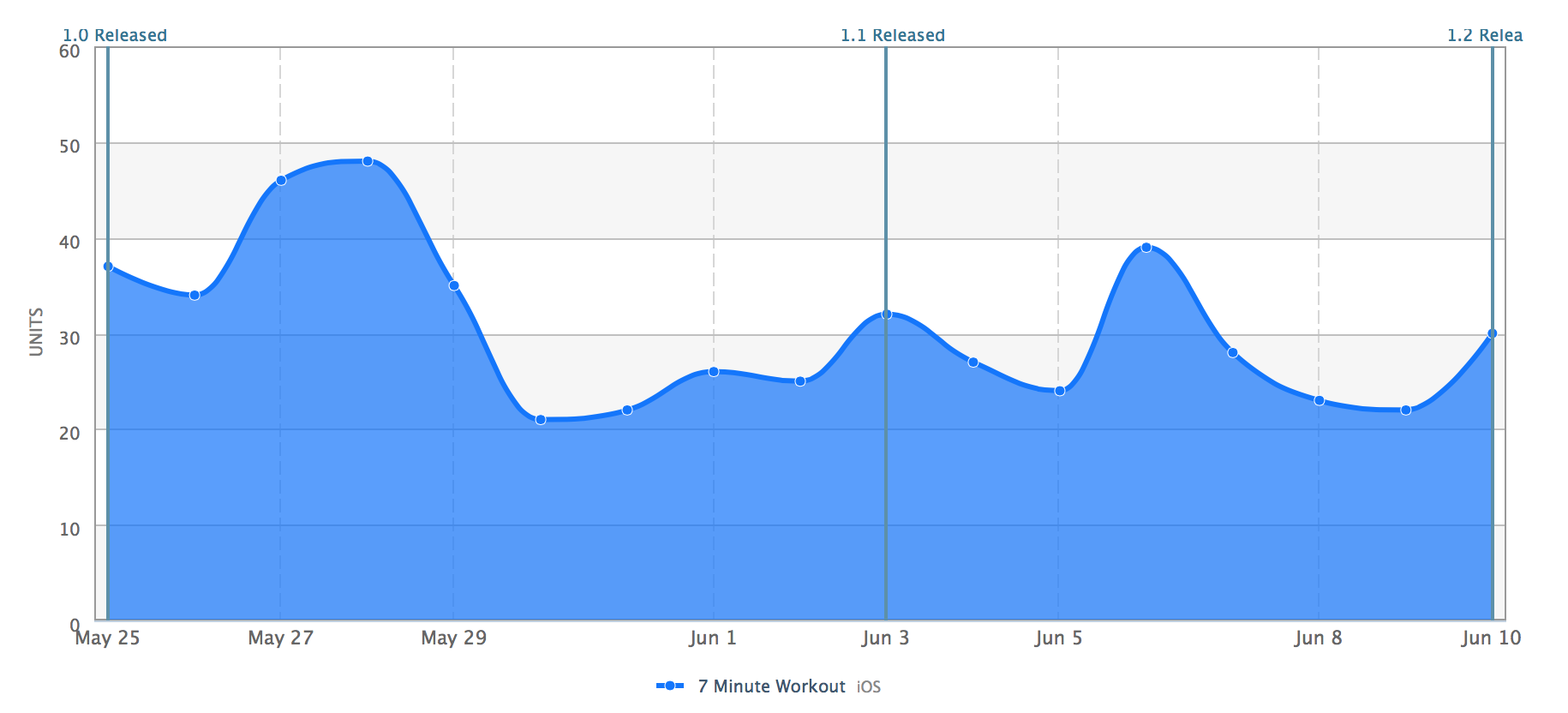
That was 3 hours wasted. What I learned from that confirmed what I already believed. You need to sell your app with a story, preferably to people you have built up a relationship with previously to get noticed.
Version 1.2 goes universal
The next stage of the experiment was to expand the market size by adding iPad support.
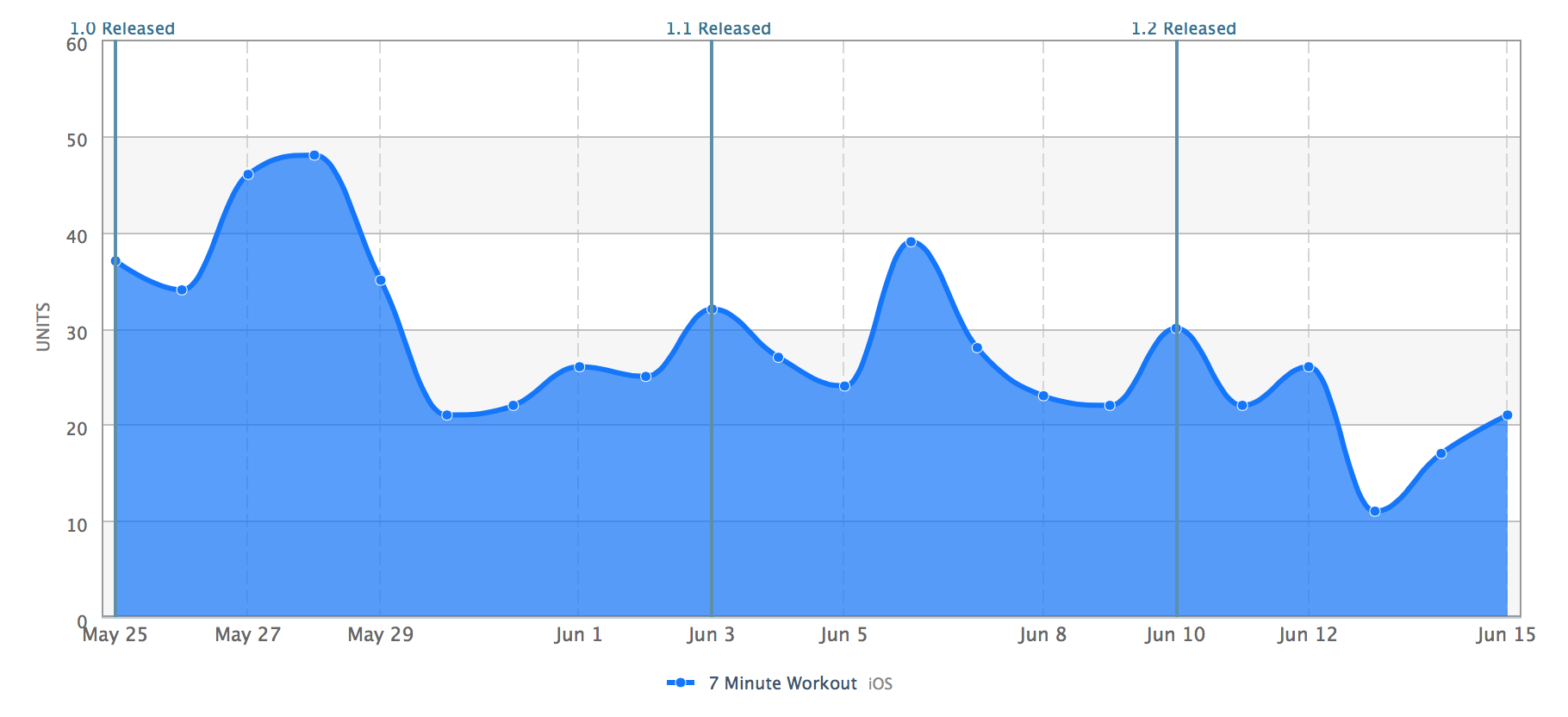
Again keeping it really simple, exactly the same views were used within a split view. So this only took about 2 hours, another 30 minutes to create some screenshots and submit the update.
Again it made almost no difference to sales.
Going free
It was time to go free. Late one night (I am in Australia), while the US was waking up I set it to free and went to bed. Wow did things get interesting.
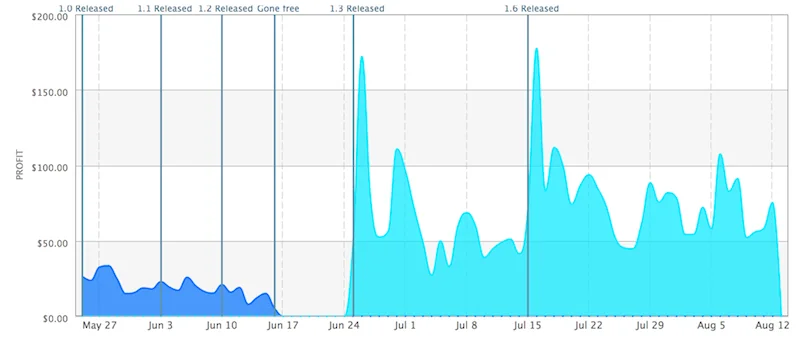
I think the chart says it all.
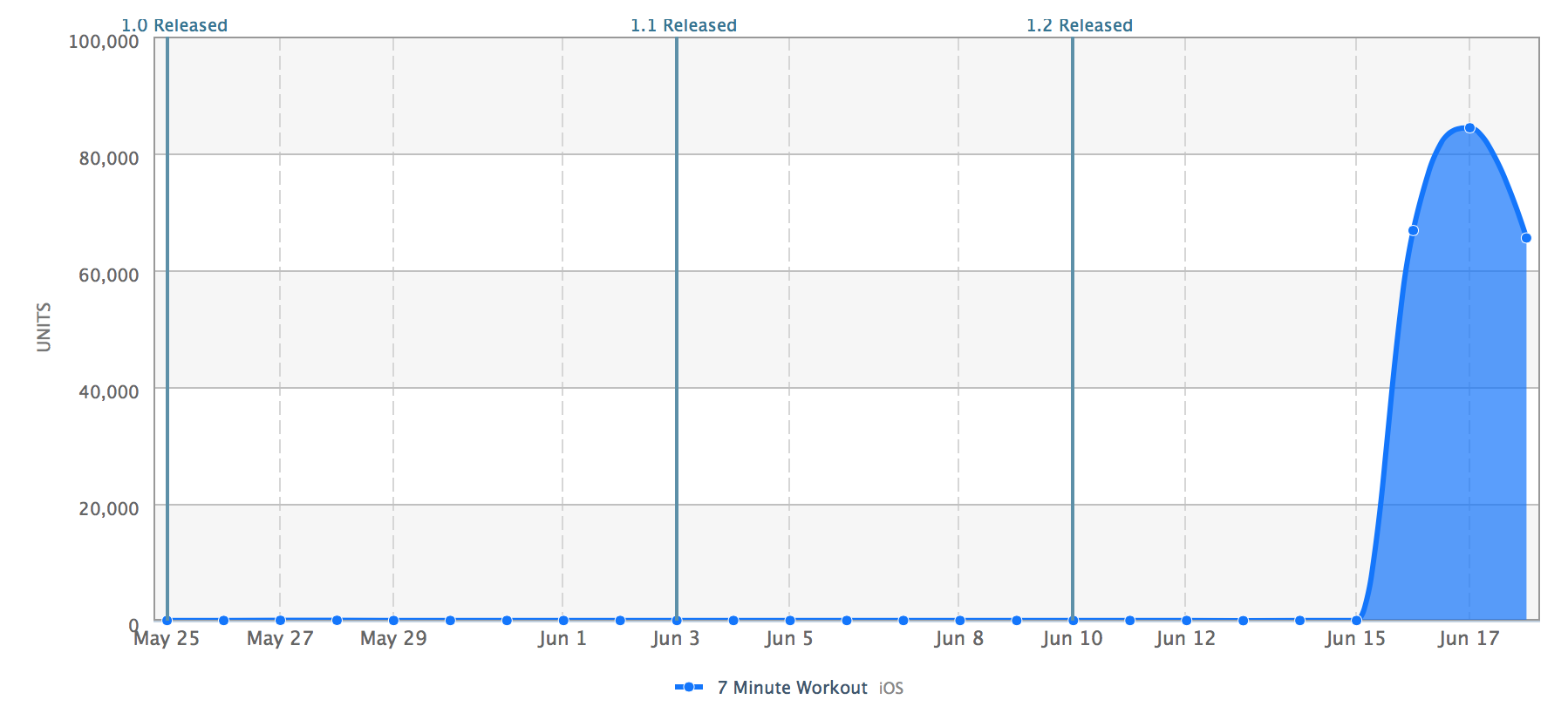
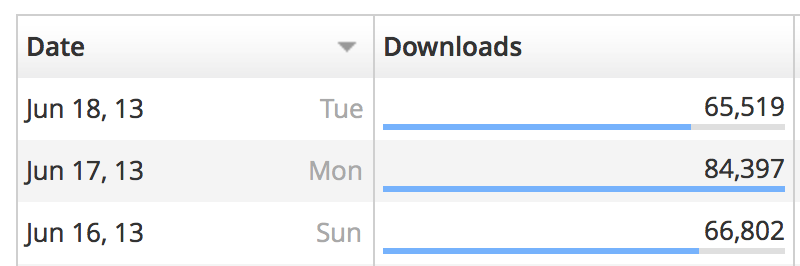
I was floored. 216,718 downloads in 3 days, an average of 72,000 per day, up from an average of 28 per day at paid, or over 2500x.
It became the #1 fitness iPad app in 68 countries. The #1 fitness iPhone app in 49 countries.
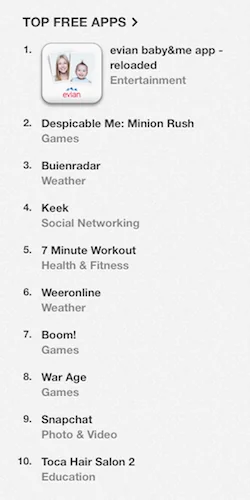
And top 10 overall in 12 countries. It even made top 5 overall in countries like Netherlands. Here it is on the front page.
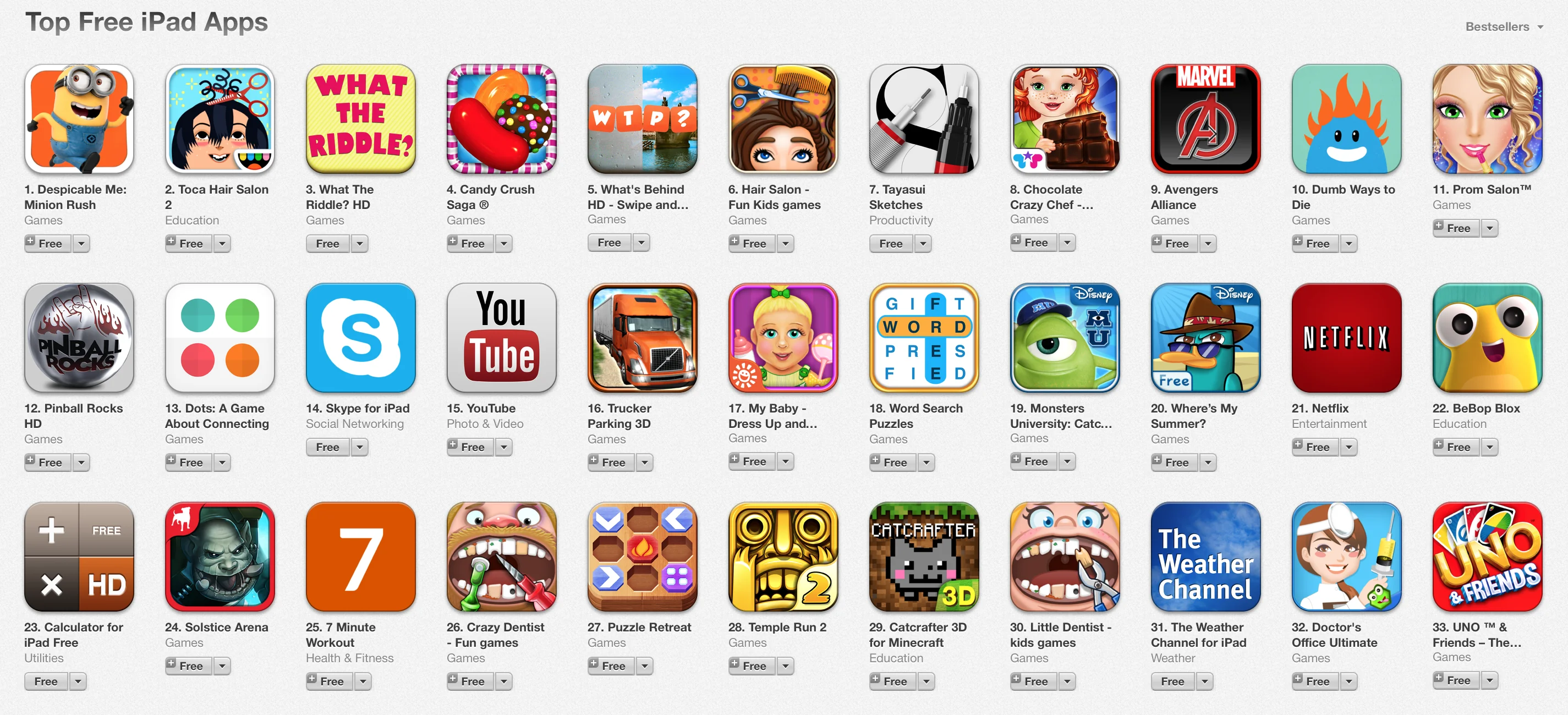
In the US (where the majority of downloads came from) it made the top 25 overall.
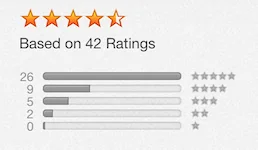
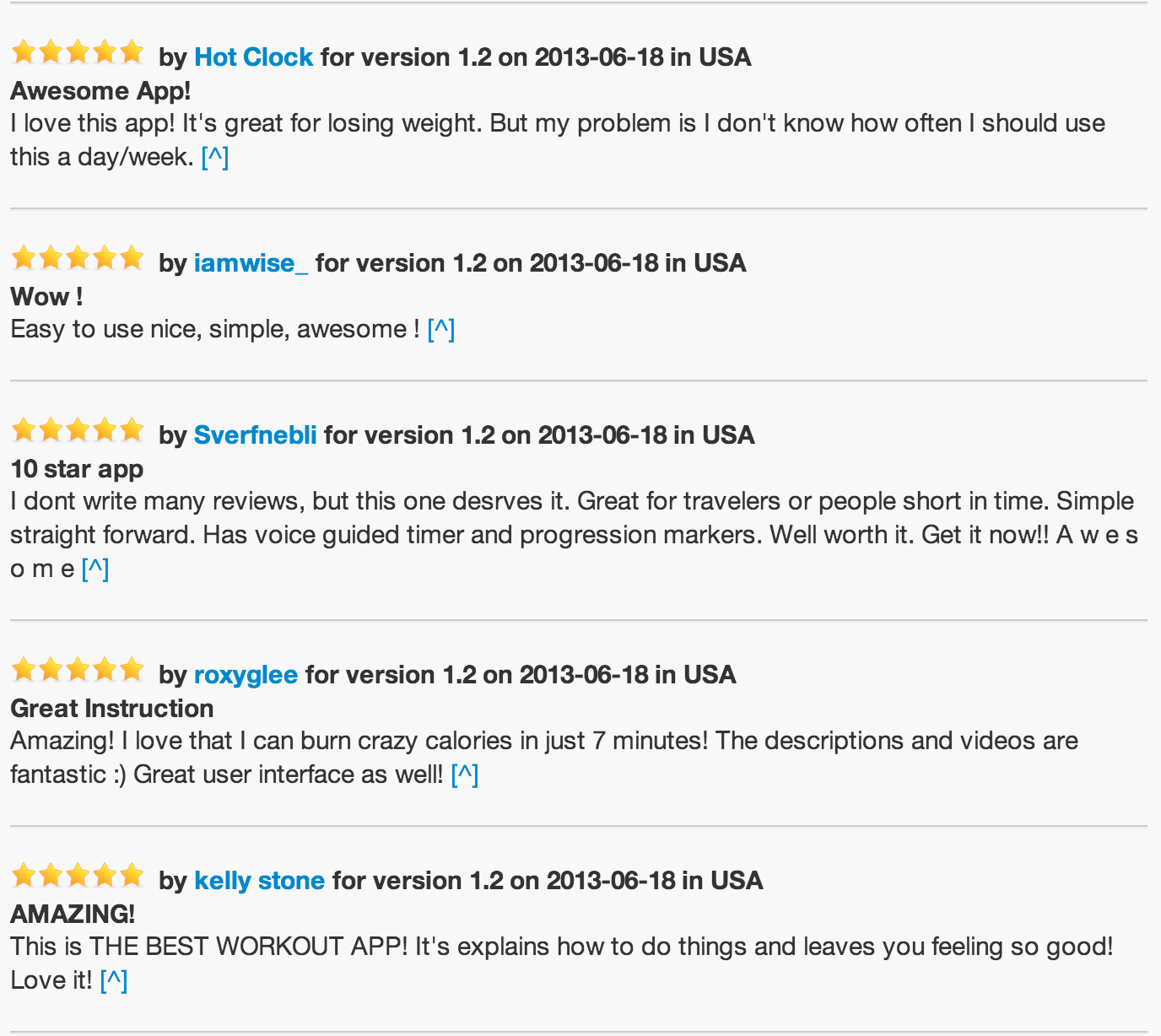
It also led to some amazing reviews (tracked thanks to my service Appbot).
This led to many, many emails from "free app of the day" sites as well as companies trying to sell paid installs.
I'll admit at this point I couldn't keep it in any longer, four people knew about the experiment and promised to keep it quiet.
At this point I am staring at the stats not knowing what to think. I still have no idea why it has done so well at free. It definitely wasn't me promoting it and it wasn't the press covering it.
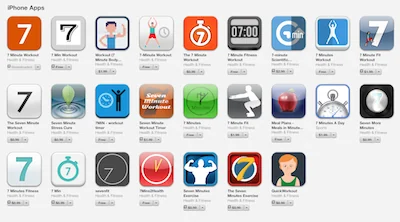
The competition
My app wasn't the first to market, it wasn't the first free one either.
Lessons learned
- Simple can still do well. Build something topical that solves a simple problem, preferably something that you'll actually use.
- It doesn't have to take a lot of time to test out an idea. I've spent 12 hours so far.
- You don't need to be first to market. There were several other 7 Minute Workout apps in the store when I launched. Many were free when I launched.
- Keep focused. Don't try and solve every problem you can imagine or implement every feature that might be wanted.
- Marketing is hard. It's not just a matter of sending off a simple press release, you need to build contacts and a story.
- The App Store is an amazing marketing channel.
- Try and get a really descriptive name.
- It doesn't have to be perfect. Take a risk.
- Anyone can do it.
The profit from the period the app was paid stood at $440.90, which I decided to give to charity. It ended up going to a local Perth charity, Footprints.
Part 2: In-app purchases and listening to users
Originally published August 2013.
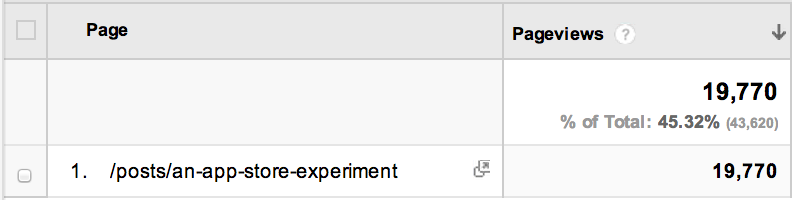
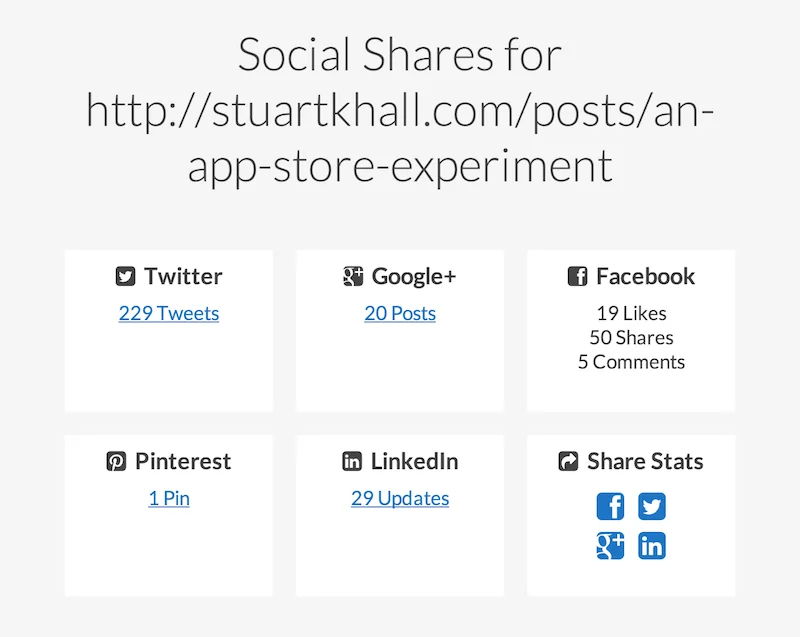
As many of you guessed, part 1 of this blog post was the next experiment. The blog post did reasonably well, almost 20k page views, 220+ Tweets, 50 Facebook shares and number 2 on the front page of Hacker News.
And everyone knows the front page of Hacker News is instant success for any product, right?
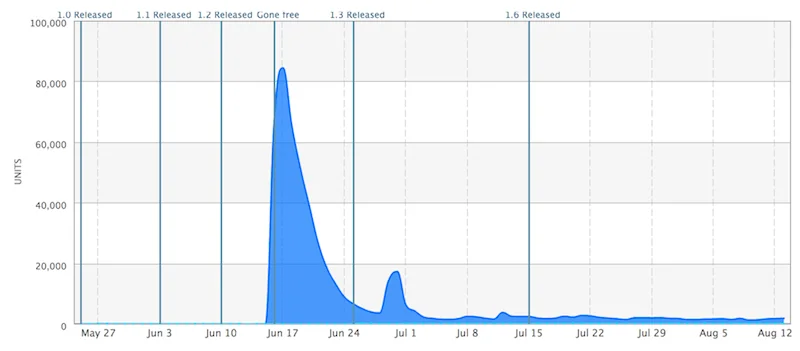
What goes up, must come down
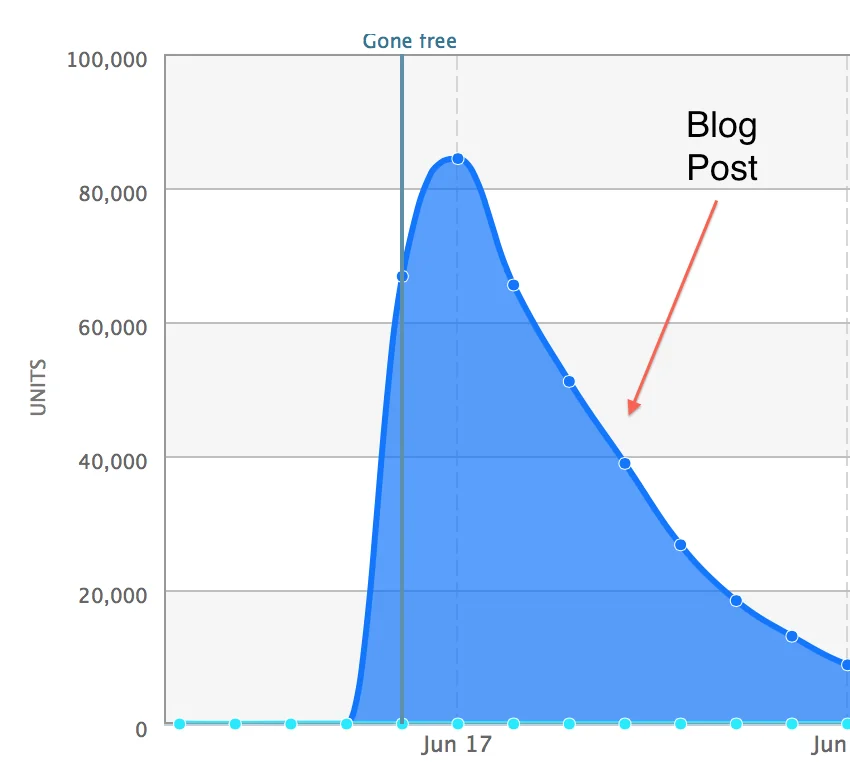
When the downloads began to fall, they kept falling in a very neat curve. As you can see the front page of Hacker News didn't have any noticeable impact.
In app purchase
I have a love-hate relationship with in app purchases. They are the best way currently to provide a trial, but in my opinion are abused by many developers (kids games are often the worst offenders).
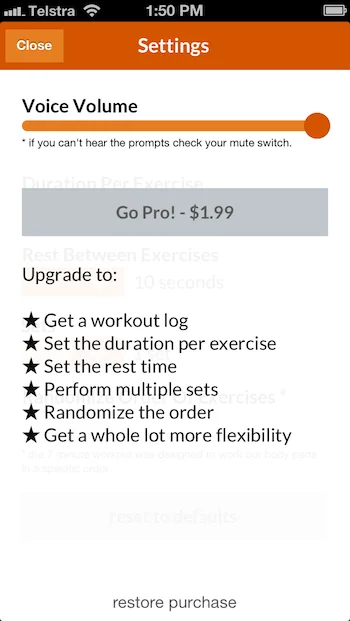
I had many requests to make the workouts a bit more flexible in time and sets, so thought this was the perfect opportunity to add a pro upgrade.
Pretty simple, some decent extra functionality for a few bucks.
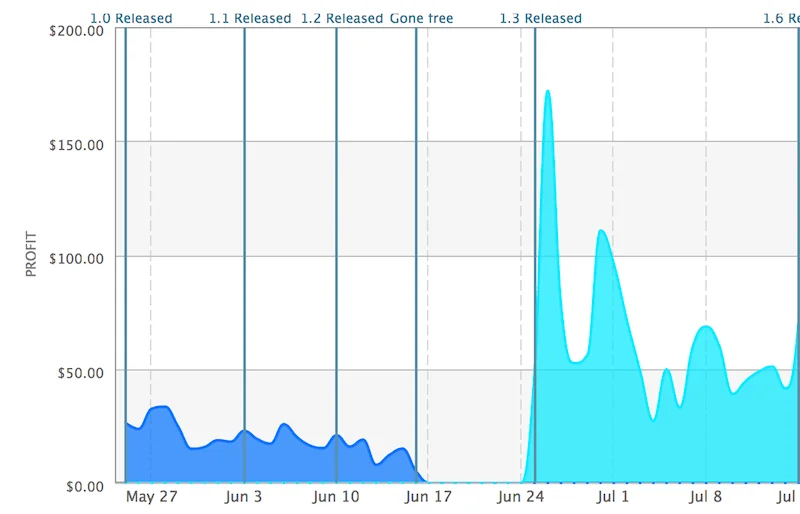
How does in app purchase (IAP) stack up against a paid download? For this app it's been an increase of over 3x from around $22 per day to around $65 per day. The IAP converts at approximately 2-3% of the downloads per day.
Translating App Store descriptions
More than 50% of the downloads have always been from the US, with countries like Canada, Netherlands, Philippines and the UK all being about 1/10th of the US.
Something I have seen work well in the past is local App Store description translations. So based on a few recommendations I translated to Portuguese, Japanese, Italian, German, French and Chinese (Simplified). This cost approximately $100.
Overall this part of the experiment was a total fail having almost no effect on the number of downloads from any of those countries.
Listening to users
One thing that was continuously asked for in reviews from Appbot and from support emails was a workout log. So I added one as part of the IAP:
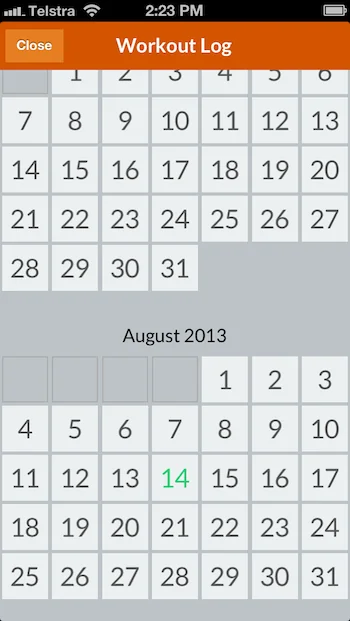
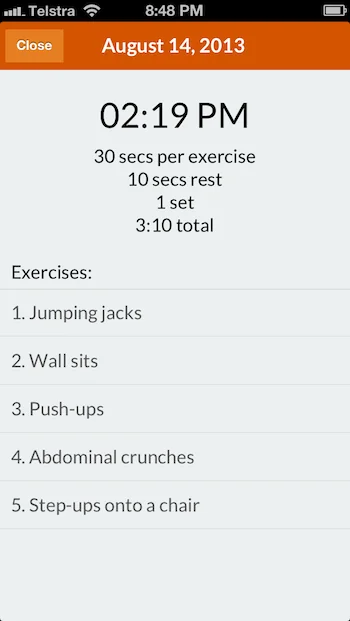
This lifted the IAP sales to around $75 per day.
Flat design
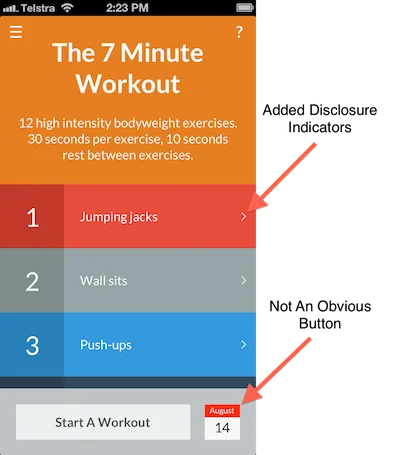
Flat design has been an interesting one, two major issues have repeated themselves consistently, both around what is tap-able.
First one is the actual rows being tap-able, which I seemed to solve by adding a little disclosure indicator.
The other is the workout log button, people don't realise this is tap-able (and why would they?).
Lessons learned
- IAP increases revenues. For better or worse for the ecosystem as a whole, it's been proven over and over again it makes more money.
- Get your IAP ready before going free. I'm sure a big opportunity was missed in the initial rush of downloads to convert IAP sales.
- The big run of downloads won't last forever, but it does settle into a consistent range you can work with.
- Flat design isn't obvious.
Stats at this point
- 520k downloads
- ~2k new downloads per day
- $6k revenue
- 1.5 million app updates
- ~10k DAU
- 71% iPhone, 22% iPad, 7% iPod Touch
- 7 million screen views
- 3,500,000 minutes of usage (over 6.5 years)
Part 3: Doing nothing, and an Apple feature
Originally published January 2014.
It's been over five months since I posted part 2 of this experiment, in that time I have done pretty much nothing on it.
It turns out that nothing has been pretty interesting.
Why have I done nothing
The startup I was co-founder of, Discovr, went through a relaunch and eventual wind up. It's been a pretty draining and emotional time over the last few months. I love the team and expect them all to go on to great things.
Part 2 of the experiment was really well received. Links from well respected blogs drove a lot of traffic.
- Marco Arment, Stuart Hall's App Store Experiment
- Mac Stories, Stuart Hall's App Store Experiment
- iOS Dev Weekly, An App Store Experiment
Downloads
For the rest of 2013 the downloads didn't achieve the levels of the early days.
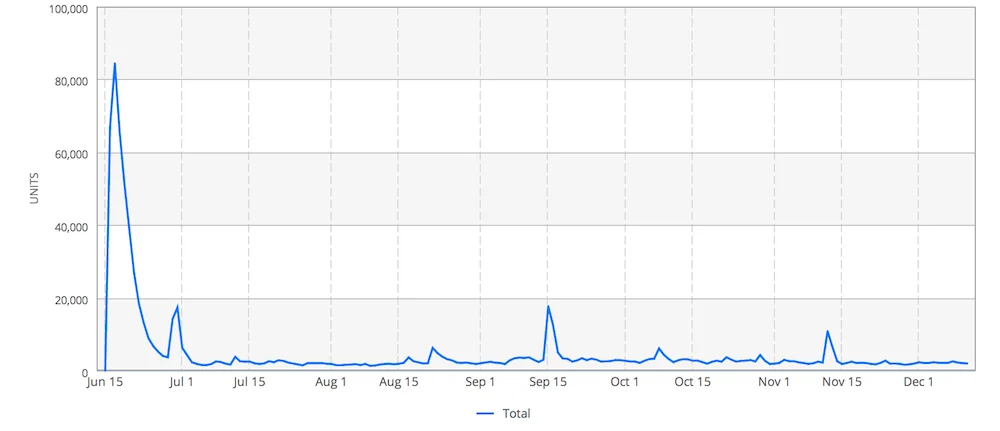
But if we look past the early craziness, downloads are still strong and flat, in the vicinity of 2,500 per day.
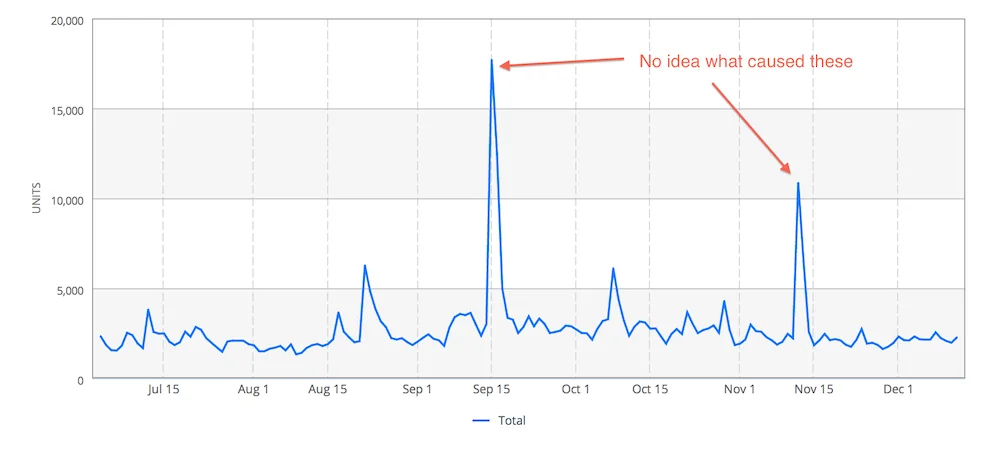
Note, that all these downloads were achieved by either App Store discovery or word of mouth. I didn't do any other promotion.
Sales
So with steady downloads I'd expect steady sales numbers, right?
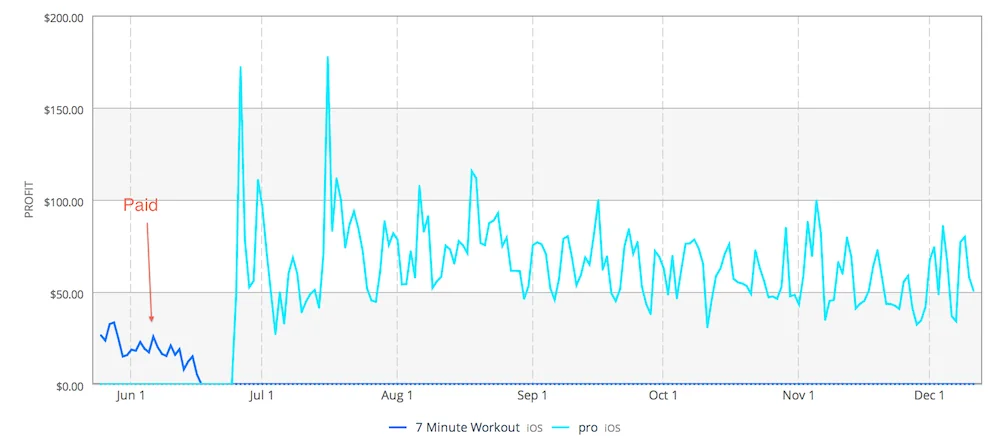
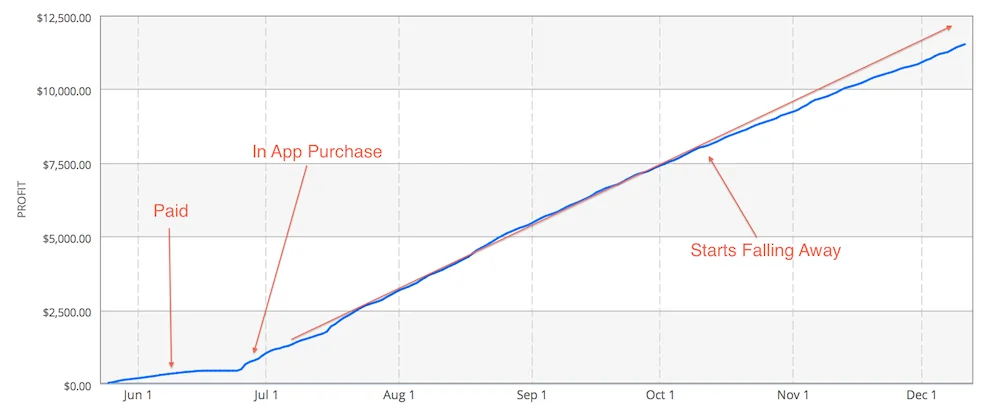
Sales were in steady decline over 2013, which can be seen even more easily with a cumulative graph.
Almost 70% of the profit was from the US.
In app purchase price
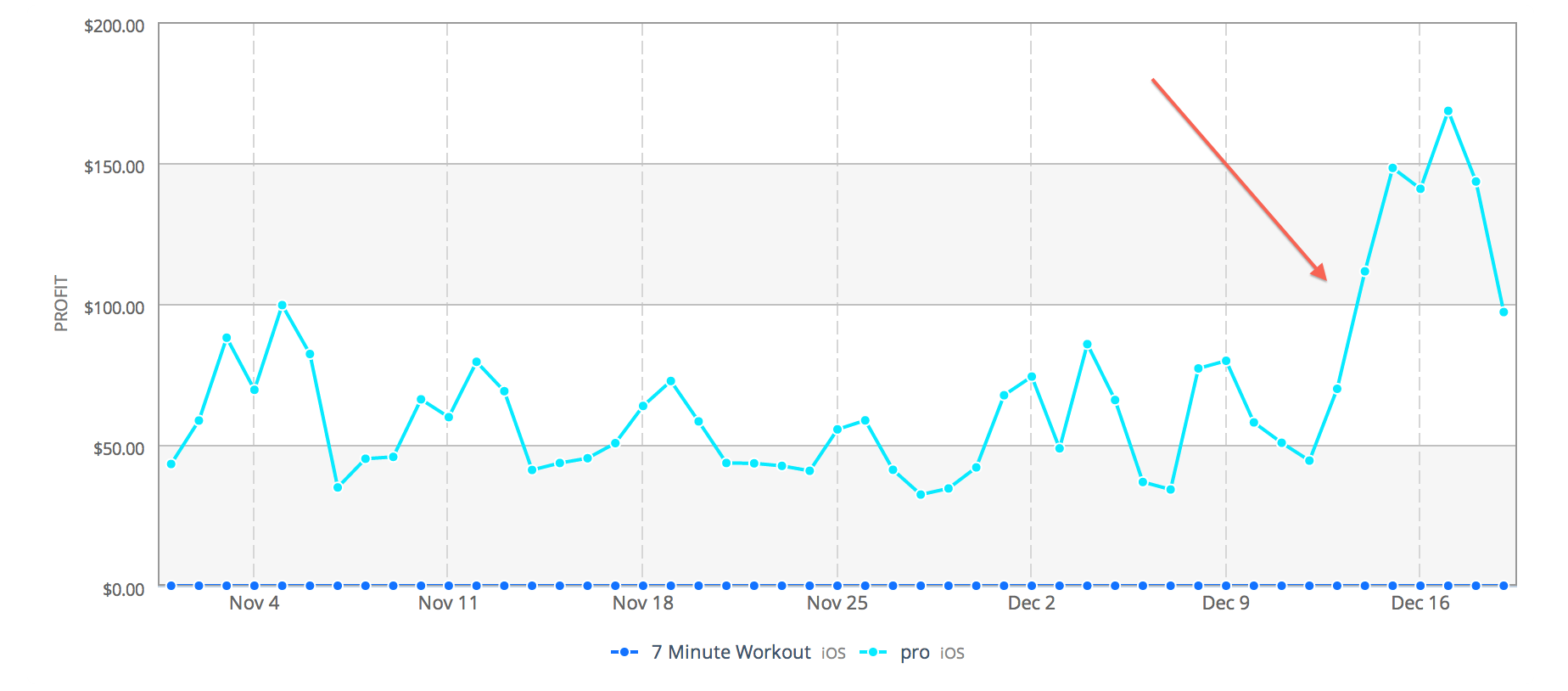
Here is the one place I did a little bit of work, I experimented with the in app purchase at 99c, $1.99 and $2.99. I ran each of them for one week and as you can see from the profit charts above it was very flat. Any increase (or decrease) in price was offset by the number of purchases.
Australian feature
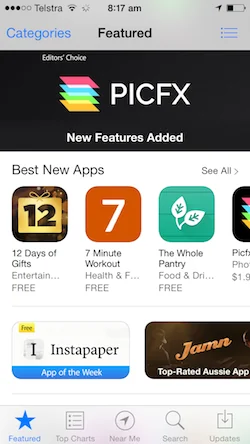
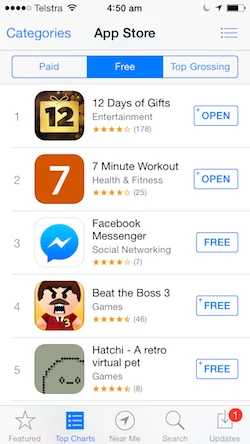
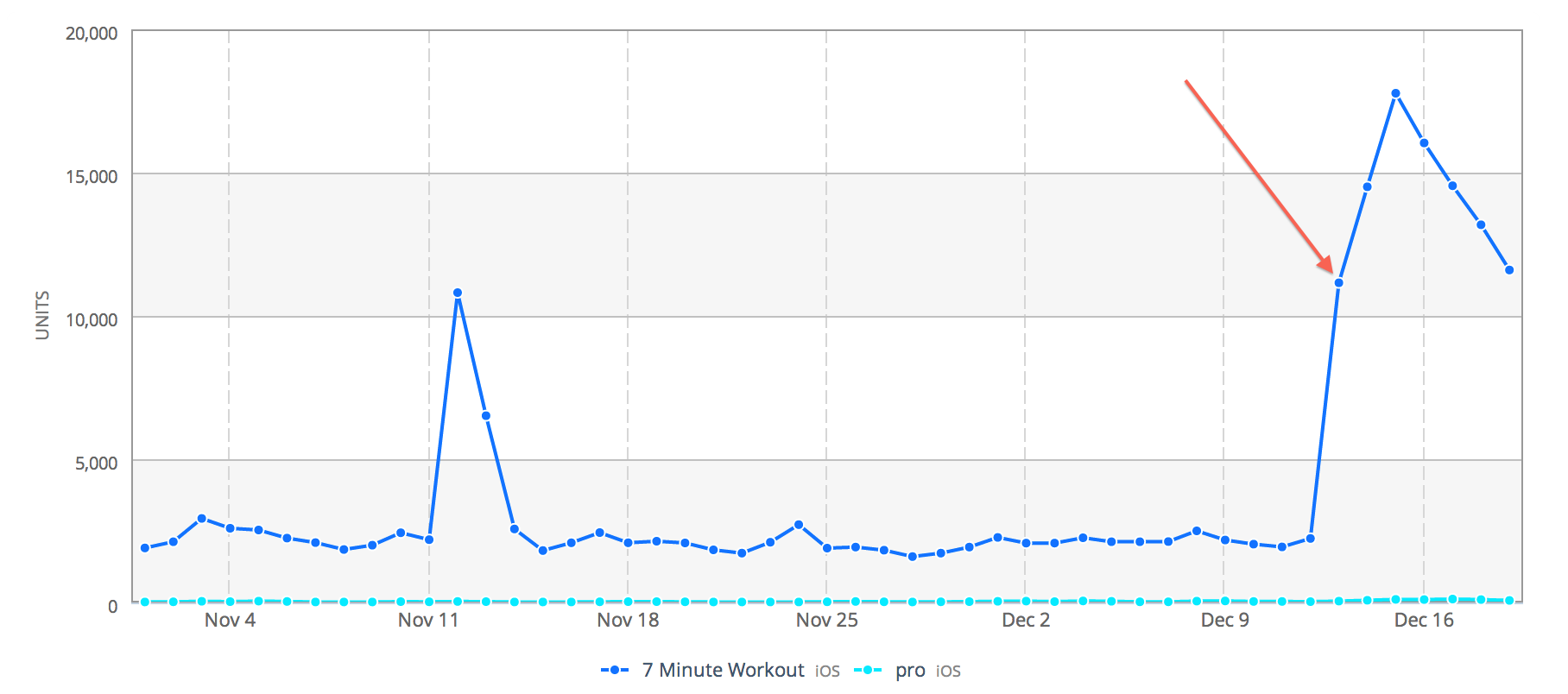
Apple were kind enough to feature the app on the front page in Australia, which isn't the biggest store but this still had a very positive impact on sales and downloads. The app even reached number two overall on the free charts, just behind Apple's 12 Days of Gifts.
Christmas and New Year resolutions
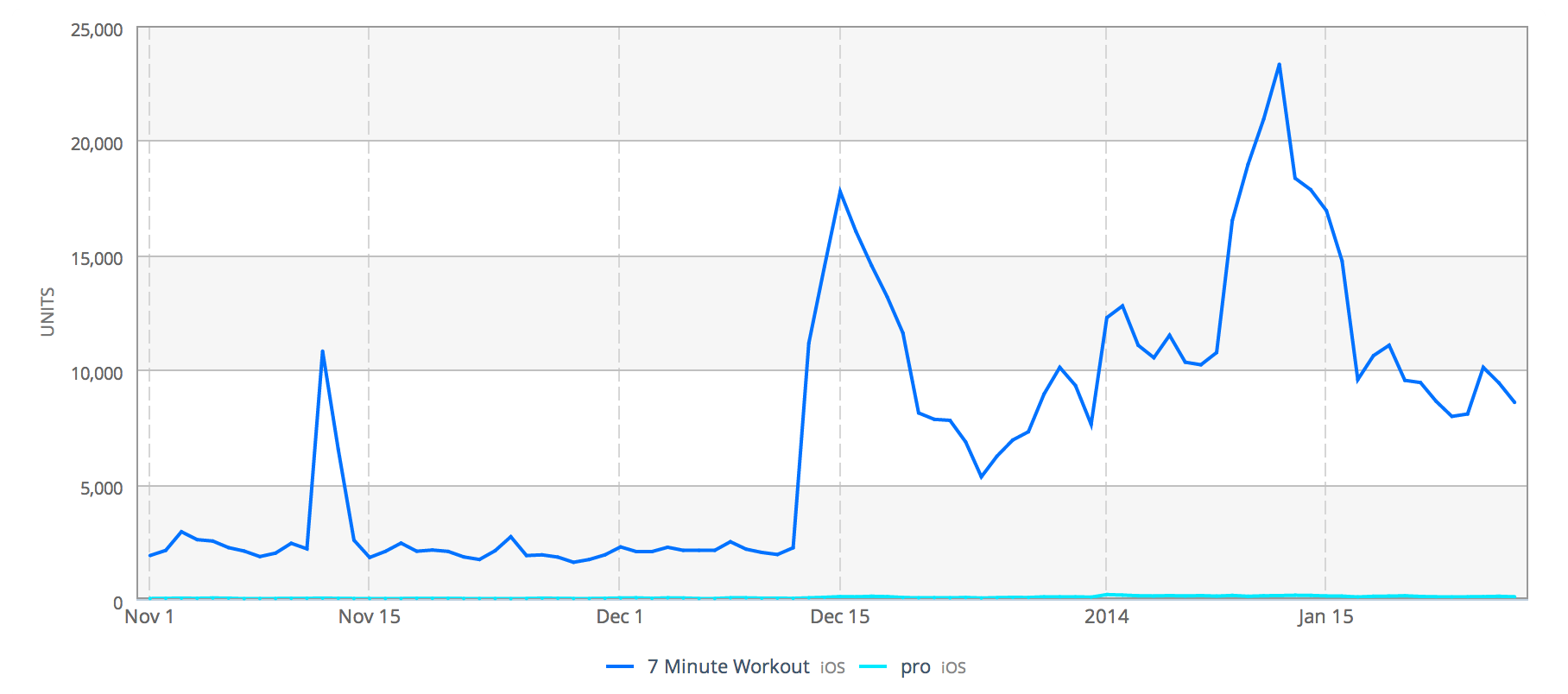
Christmas saw the millionth download and some significant spikes in both sales and downloads. The new year took it to a new level. Profits were steady through most of November and December at $50 a day. During the first half of January that figure quadrupled to $200 a day. New year resolutions are definitely a positive for fitness apps.
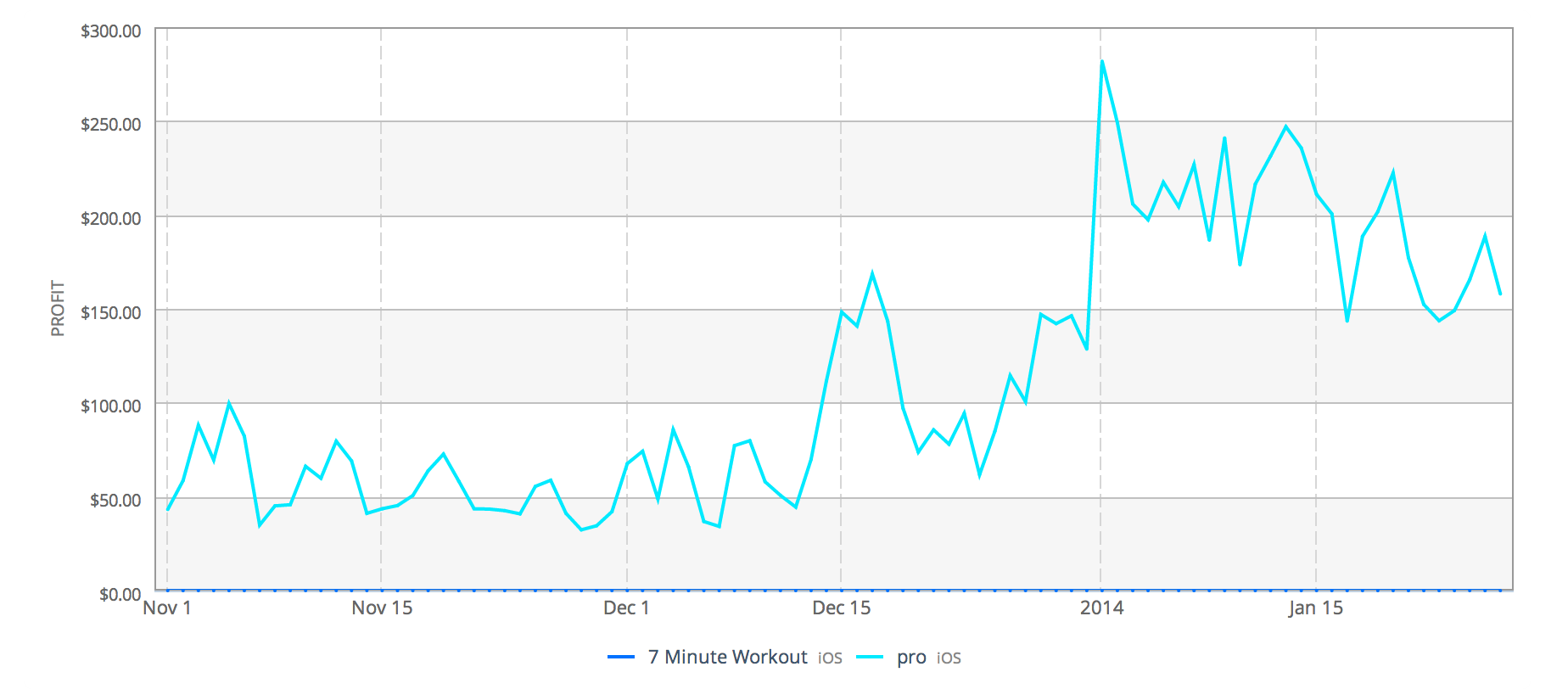
Stats at this point
- 1,412,803 downloads (5,697 per day)
- $27,317 in revenue
Even though the stats look pretty healthy, the revenue per user is crazy low at around 2 cents per user.
So the big unanswered question left for me was what would people be more willing to pay for? I'd had complaints about having to upgrade for features, so would people be more willing to pay for more content instead? Version 2 shipped with two new workouts as in app purchases, plus some great new videos.
Turn your app reviews into a product roadmap
The 7 Minute Workout experiment grew on user feedback. Join over 25% of the Fortune 100 and 35% of the top charting app developers using Appbot to analyze their reviews.
Try Appbot free for 14 days →Part 4: More IAPs and "All The Things"
Originally published August 2014.
Part 3 left off where I had just submitted an update with some extra workouts as in app purchases.
By March everyone was over their new years resolutions (unfortunately mine finished on January 1).
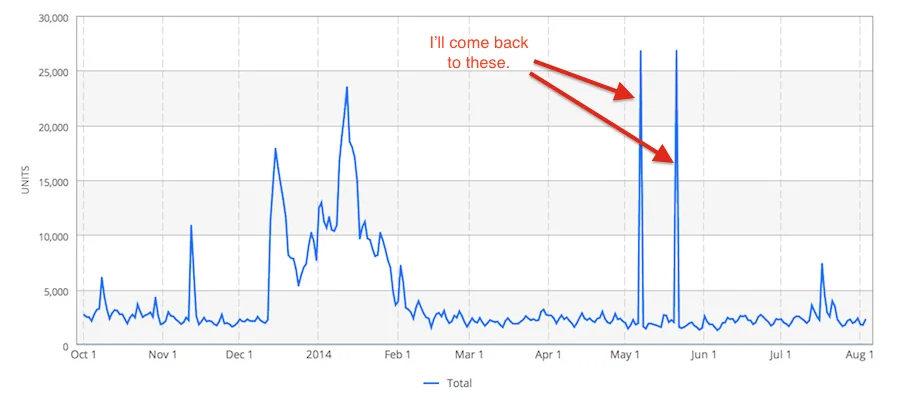
Ignoring the spikes (I'll explain them in a bit), downloads returned to where they were leading up to the silly season, between 2k and 2.5k a day.
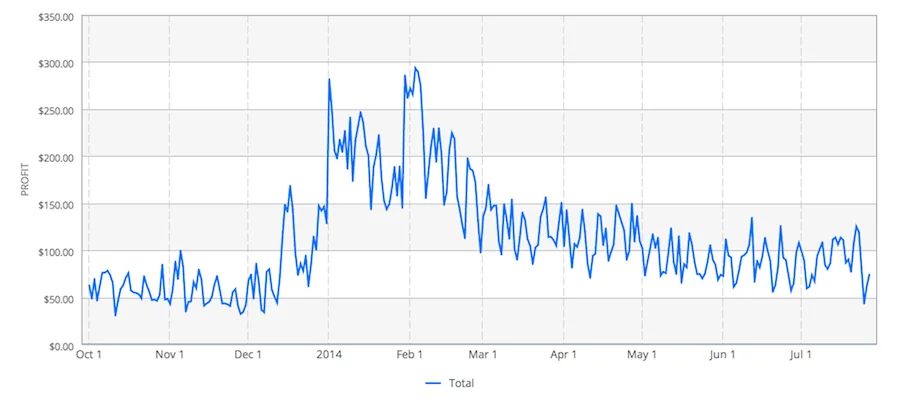
Adding the new IAPs had almost zero impact on the original Pro upgrade (staying around $50 to $60 profit a day), but they did help to lift daily revenue to around $70 to $80 profit a day. Around a 40% increase in profits compared to late last year with similar download numbers, not bad.
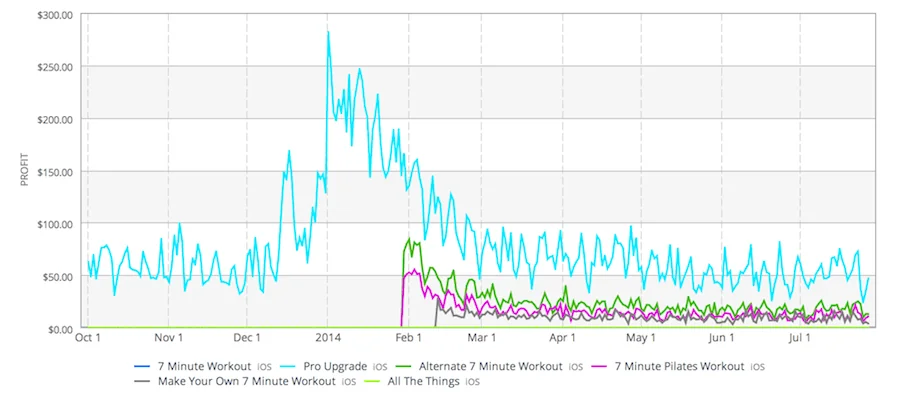
If we break it down individually you can see the Pro upgrade was still the major income stream, but the workouts help supplement it.
Educational downloads
The big spikes you saw above were educational downloads, 25k, 25k and 5k. I believe it was part of Apple's education program. I love the thought of entire schools out there doing the 7 Minute Workout.
All The Things
One thing I had noticed in a number of apps with IAP is their top download was an option to buy everything, forever.
So I tried it (this is Australian pricing, US it's $4.99 / $1.99).
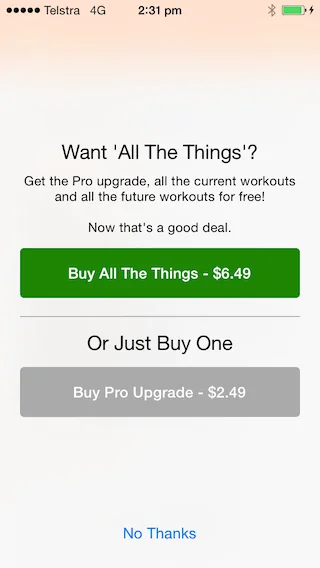
And people seemed to like it.
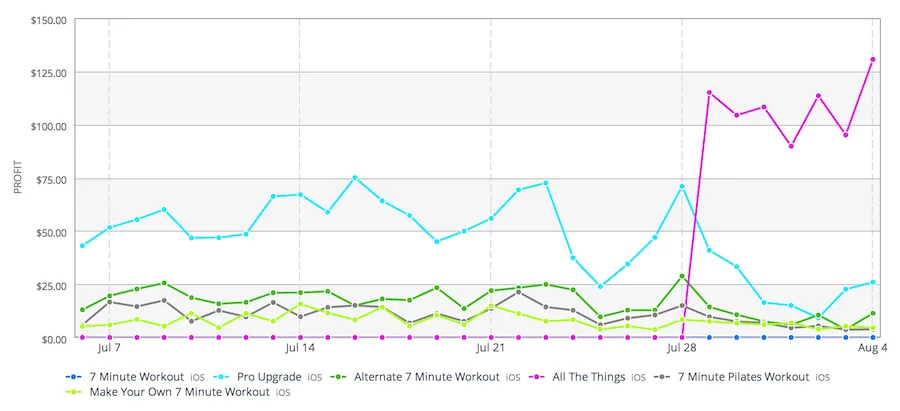
Except it's meant the other in app purchases have taken a nose dive. But overall profit is up to around $145 per day for the first week or so.
Reviews and feedback
One problem I've always had is after an update the reviews reset and I am stuck back at square one.
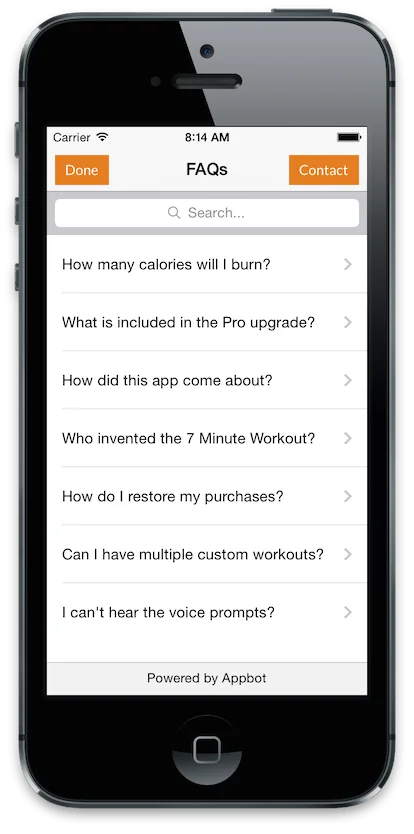
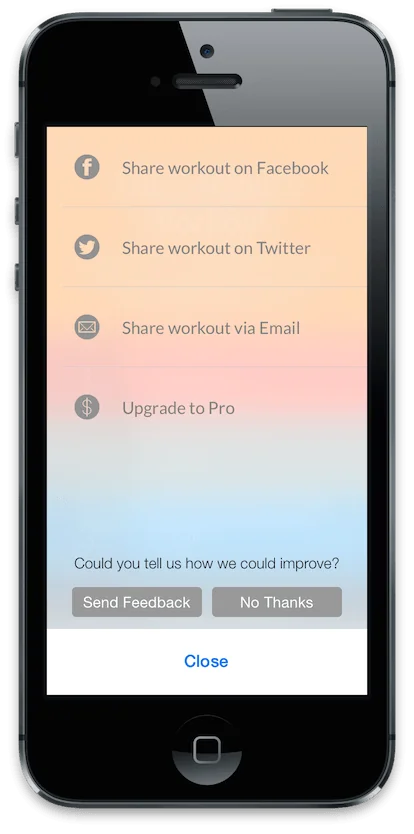
I recently launched AppbotX to help developers get better app reviews and communicate with their customers, and I put the FAQs, Feedback, Notifications and Review Prompt from the service into the app.
Thanks to the FAQs general support dropped from ~2 requests a day to 1 in a week.
I put the review prompt after a positive interaction, in this case when they finish a workout.
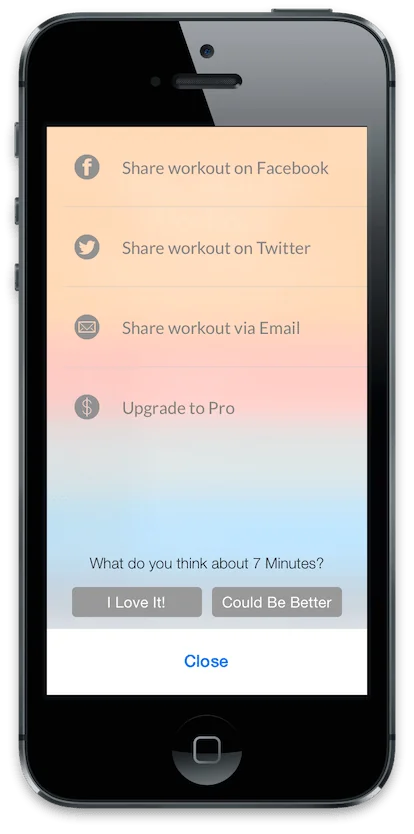
If they like the app it asks them to leave a review.
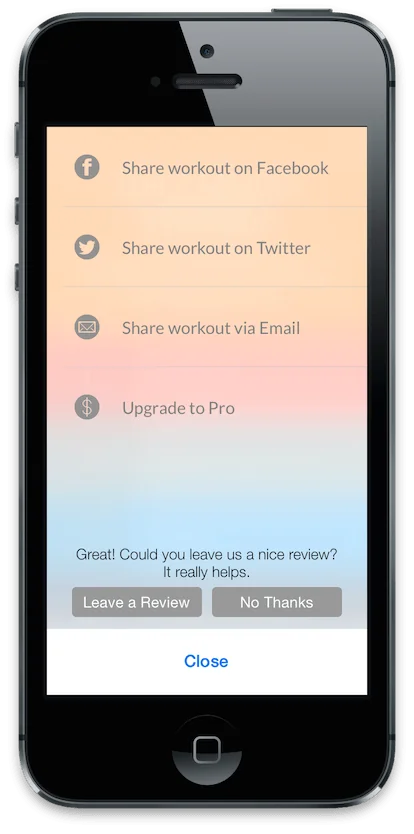
Otherwise it asks for feedback.
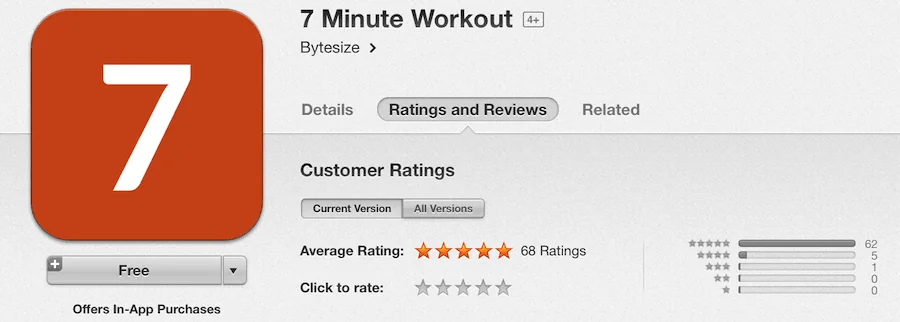
The results are awesome. Here are the current reviews on the US App Store.
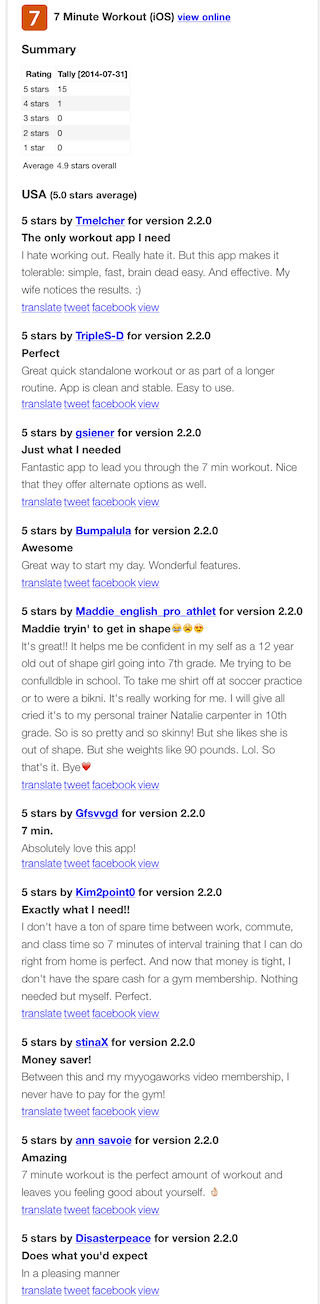
And here is an example of some of the reviews Appbot sent through in its daily digest.
I've also received great feedback, 80% of which can be grouped into two things.
- Lots of people want an abs workout.
- They want an easier way to review how to do each exercise during the workout.
Indie development
Much has been written about being an indie developer on the App Store recently, with not much of it positive.
I think this experiment has shown us a few really important things.
- Go with pricing models that are being proven to work.
- As much as we all hate it, market is more important than product (but both are extremely important).
- SEO and ASO are extremely important, and often overlooked.
I'd been doing a bunch of consulting where I go through apps for developers and give them feedback on how to improve their downloads. Many of these apps are getting only a handful of downloads a day. They have the same thing in common, they have done no work on SEO/ASO and if you look at their App Store page you'd have no idea what their app does.
You know how much development work you put into the app? Put at least half that again into your communication, visibility and story.
Stats at this point
- 1.95m downloads.
- 5.5m updates.
- $60k in revenue.
Part 5: The finale with HealthKit, getting featured and an acquisition
Originally published February 2015.
A bunch of interesting things have happened since part 4. Why is it the finale? Read on.
All The Things
In part 4 I added "All The Things" as an in app purchase option. This resulted in an overall increase in revenue compared to before "All The Things" was introduced and it also became the major revenue stream.
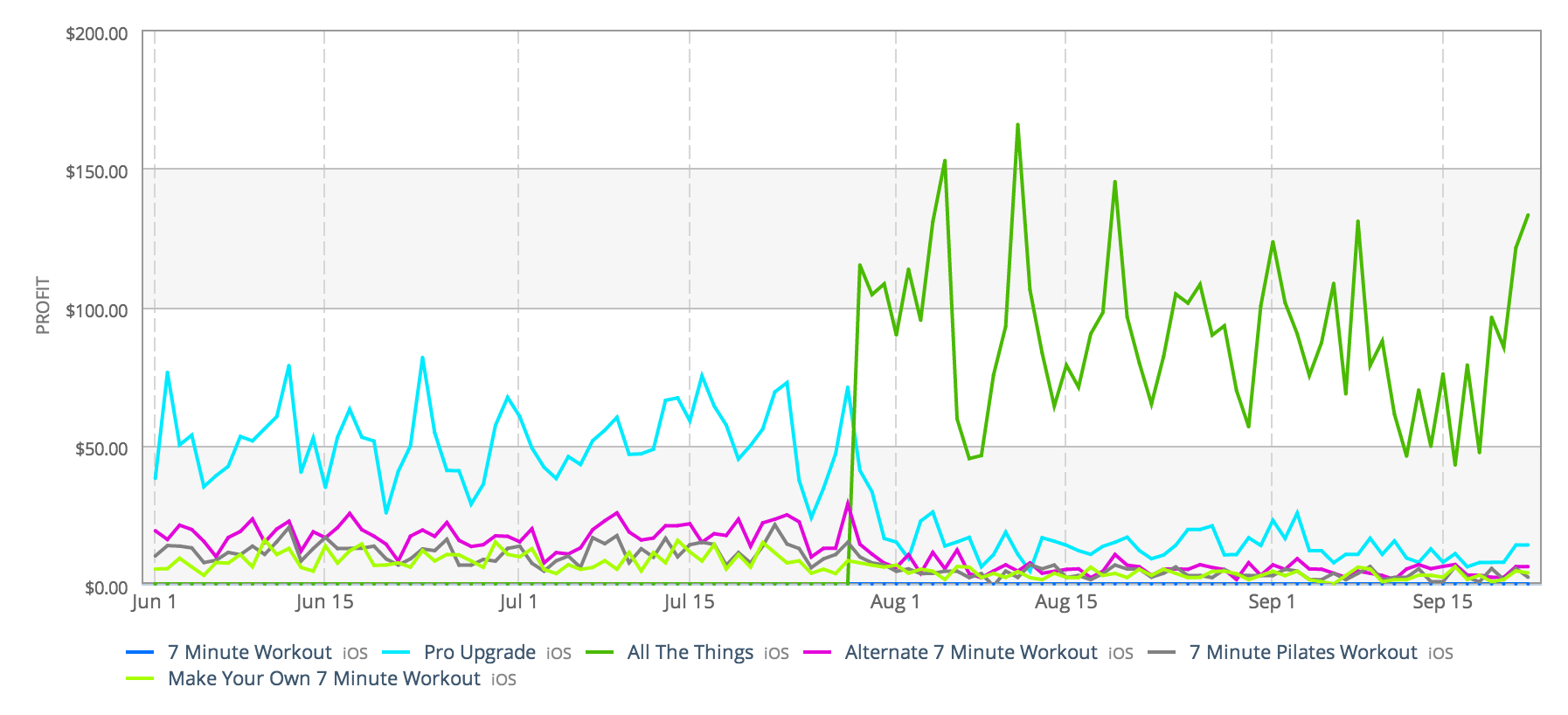
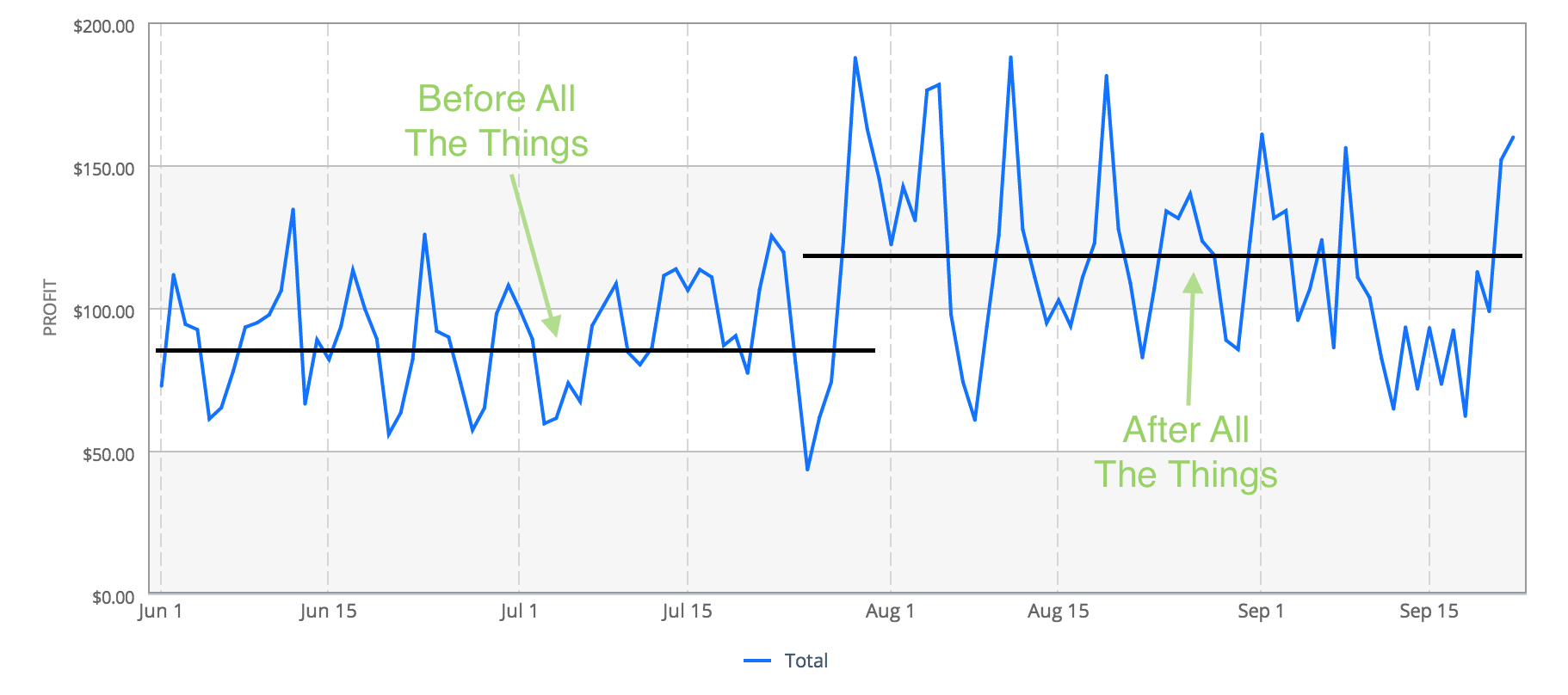
I'd call that experiment a success, and I highly recommend you consider adding an option to bundle in app purchases to your own apps.
HealthKit
As Apple describes it, "HealthKit allows apps that provide health and fitness services to share their data with the new Health app and with each other. A user's health information is stored in a centralized and secure location and the user decides which data should be shared with your app." That sounds like something that would work in 7 Minute Workout.
I wanted the app to offer HealthKit support as soon as Apple released it, so I made sure I added iOS 8, HealthKit and iPhone 6/6 Plus support well before launch and submitted to the App Store.
iOS 8 rolled out during the night in Australia and I woke up to this.
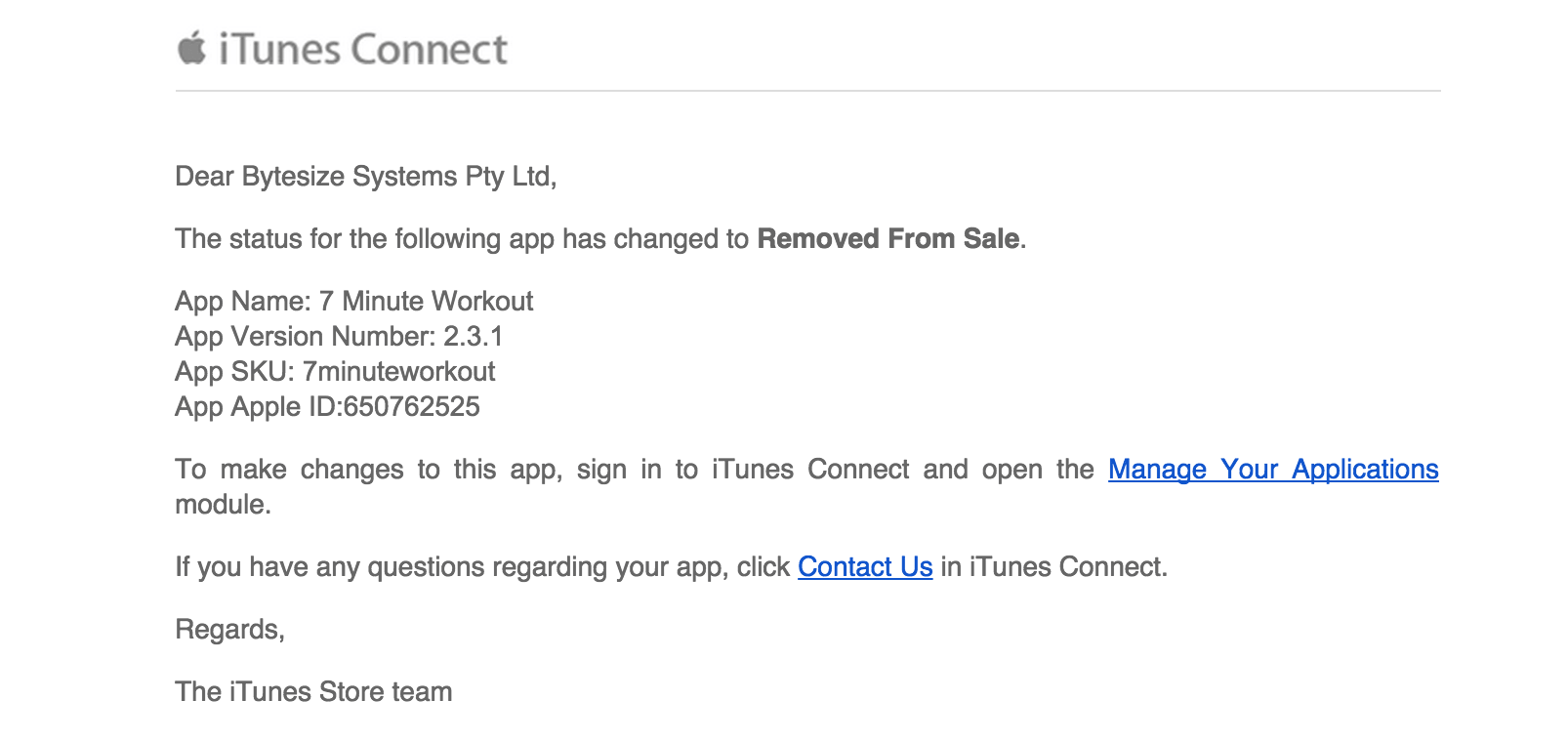
I also had a missed call from a U.S. number. After some frantic Googling I found headlines like this one suggesting "Apple reportedly has pulled HealthKit-compatible apps from the App Store" and that "Apple appears to have discovered a significant last-minute issue with its HealthKit services". Phew, at least it wasn't just me.
Apple were actually amazing during the process, constant calls keeping me up to date and getting my app (sans HealthKit) approved and back on the store within 36 hours with no loss of rank or search position.
I had a bunch of confused users who had the app update with HealthKit, only to have it removed soon after. Luckily being able to add a FAQ remotely dried up the support requests.
App Preview
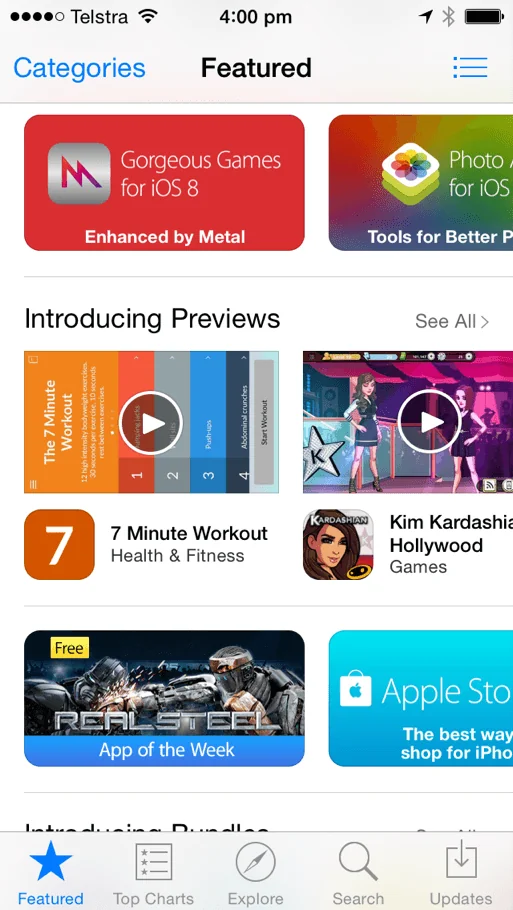
Even though HealthKit didn't come through for me on the iOS 8 launch I did manage to get my App Preview live and Apple Australia were kind enough to feature it.
HealthKit take 2
With iOS 8.0.2 came the actual launch of HealthKit.
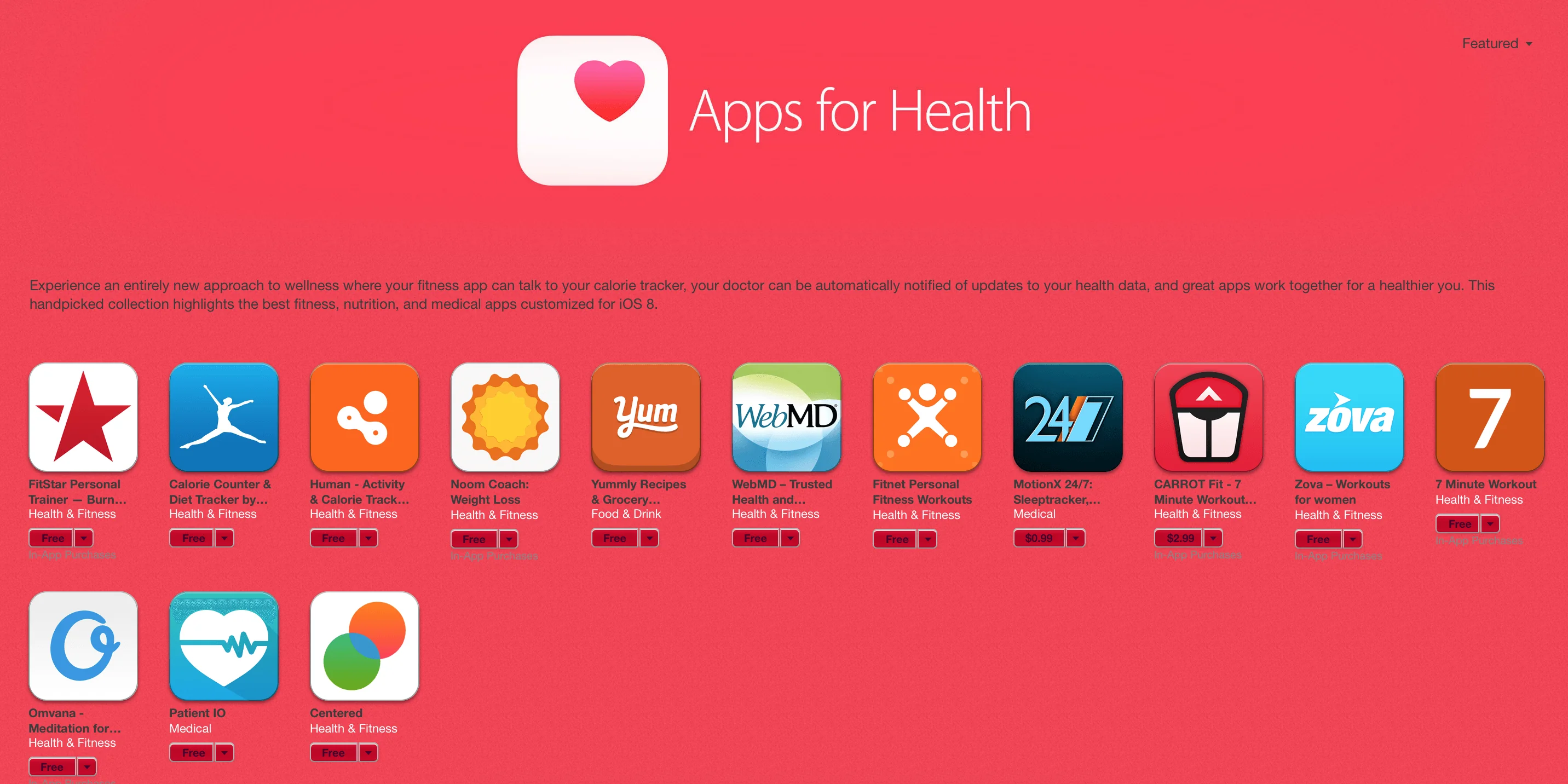
I was away speaking at a conference in Melbourne (and then for two weeks of travelling with my family) when the app was featured in a special Apps For Health promo on the App Store home page in the US.
Which resulted in the following sales.
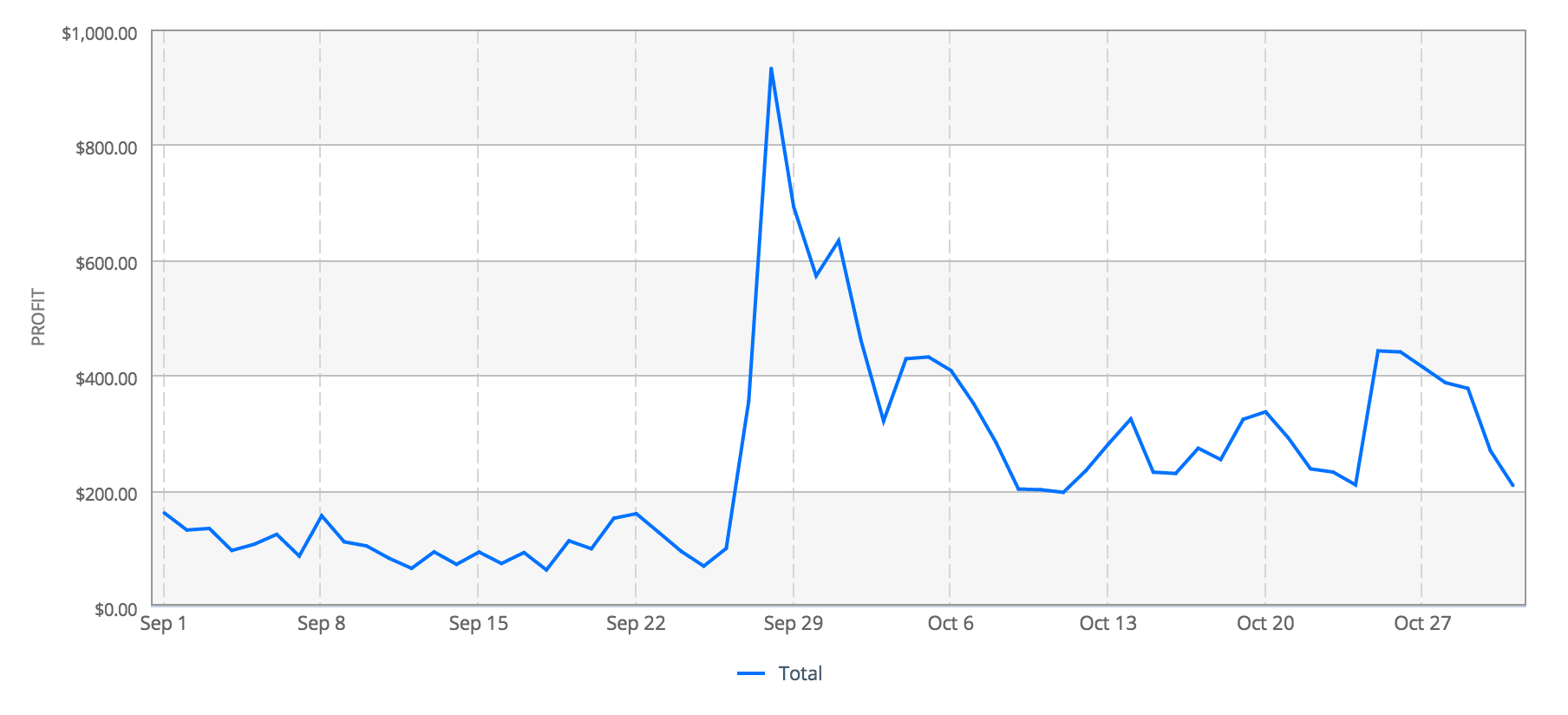
The best ever days for the app, bigger than even the New Years.
It also generated a bunch of press over the next few days like this and this and many more.
Getting featured
A big lesson from both adding HealthKit early and the App Preview was that you need to give Apple every opportunity to feature your app. Believe it or not Apple are on the lookout for apps to feature.
What better way to stand out than being one of the first to get behind a feature that Apple is about to launch.
Acquired by Wahoo Fitness
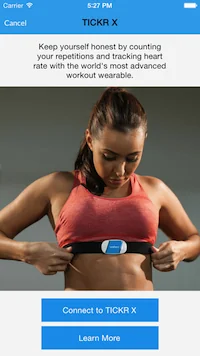
Wahoo Fitness produce great app-connected sensors and were featured at the 2014 WWDC Keynote. Their TICKR X sensor is a heart rate monitor and it can also track exercise repetition movement.
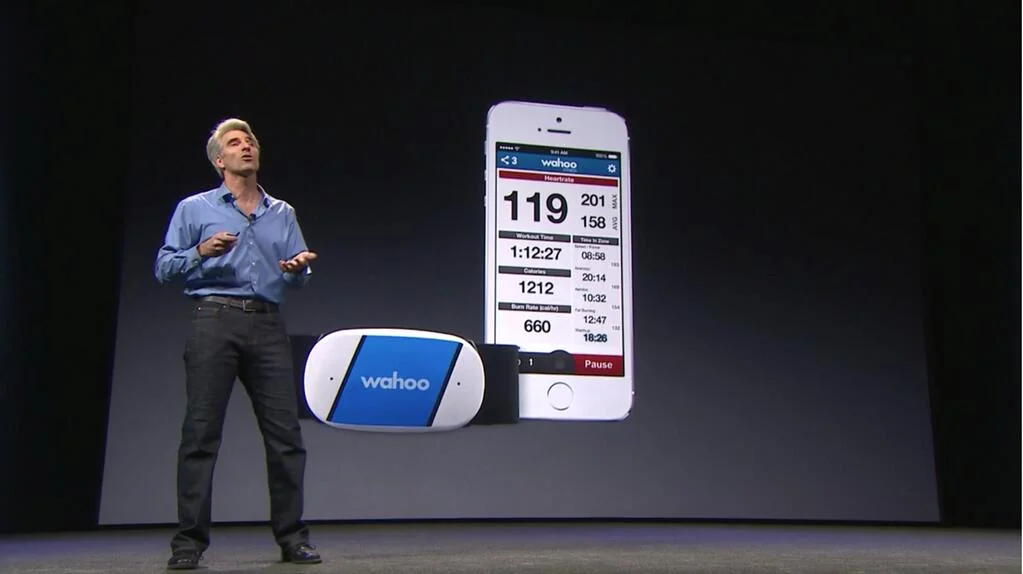
So when Mike at Wahoo emailed me back in May about 7 Minute Workout, and how it might integrate with their suite of products, I was intrigued.
Over the next two months we had a few discussions, but it stalled as I didn't feel finished with the app, and they weren't quite ready with their device.
Fast forward to November and things changed. I'd been head-down working on Appbot and Wahoo came back with an offer to buy 7 Minute Workout. The timing was right and I was confident it would be in good hands.
Final stats
- 2.3 million downloads
- 7.7 million updates
- $72k profit
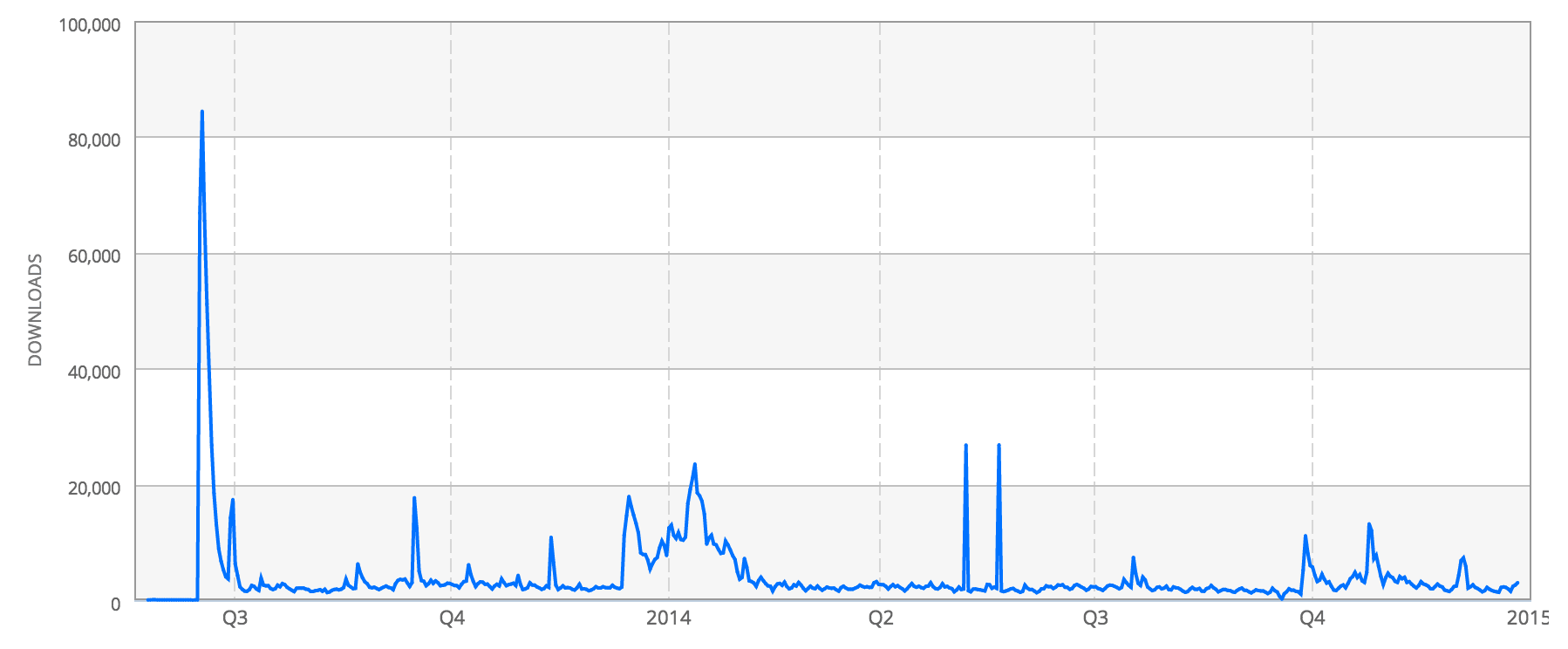
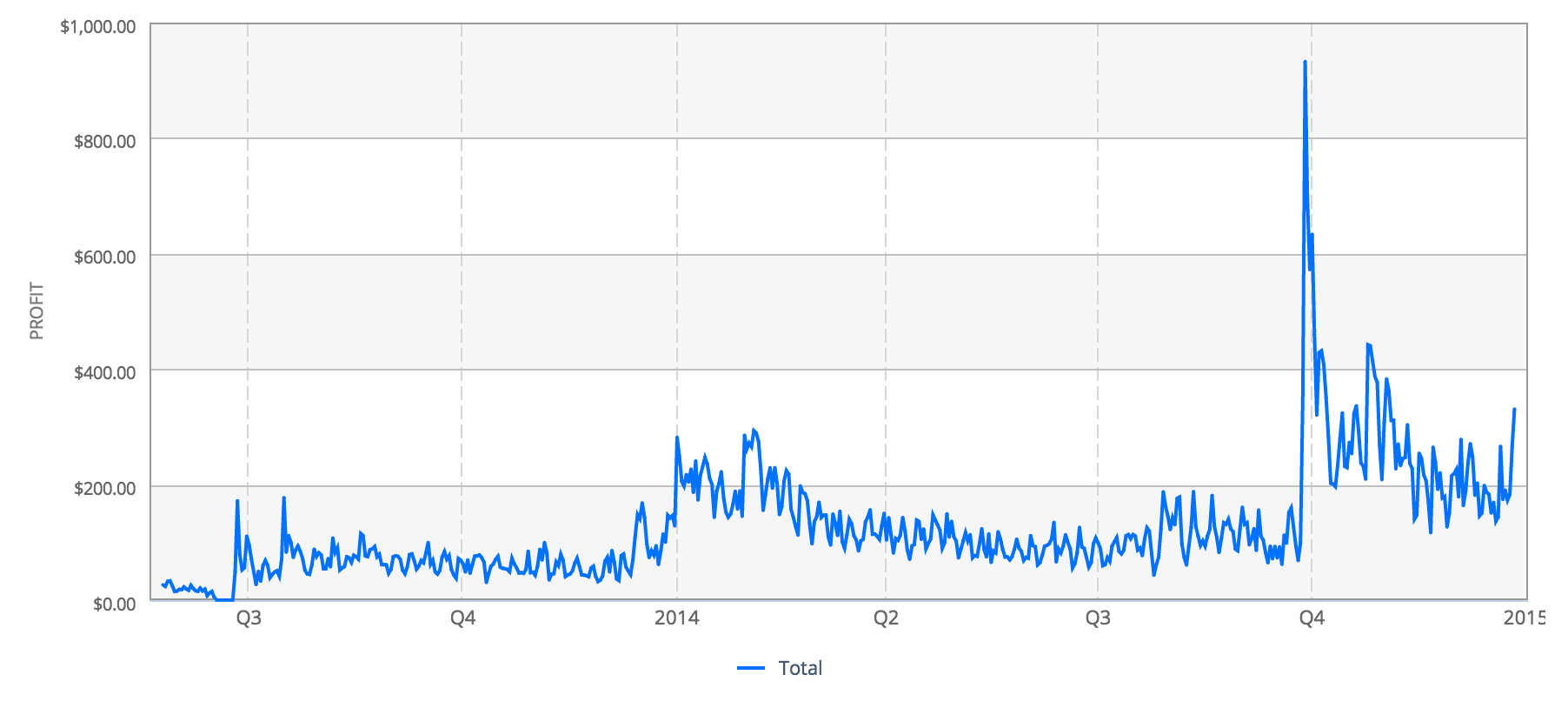
Plus dozens of amazing emails, Tweets and messages from people who were in part inspired to start developing apps thanks to these blog posts. Thank you to everyone that sent feedback or read the posts.

Final words
One thing that Chip (the CEO of Wahoo) said to me on the first call we had will stick with me for a long time … "We probably wouldn't have considered buying your app if we hadn't read the story".
I was just looking back at the first point in the first paragraph of part 1 of the experiment.
"How important is it to create a story around your product?"
I think I'll call that a "very important".
What happened after 2.3 million app downloads?
The original experiment ended with millions of downloads and the acquisition of 7 Minute Workout by Wahoo Fitness.
But that wasn't actually the end of the app.
Years later, I got 7 Minute Workout back and began experimenting with it again. That resulted in three more chapters covering what happened when I tried to revive an ageing app, experienced the extraordinary changes in the fitness-app market during COVID-19, and eventually switched its monetisation model to subscriptions.
If you've just finished the original story, here's where to continue.
Can you bring an old app back to life?
The Resurrection picks up several years after the original experiment, when Wahoo Fitness offered to give 7 Minute Workout back to me.
The app hadn't received much attention for years, which presented an interesting new challenge. Could I revive it?
I updated the app, changed its App Store presence and experimented with its monetisation to see whether an older app could begin generating meaningful downloads and revenue again.
Continue the experiment → The Resurrection: How I Got 2.3 Million App Downloads
What happened during COVID-19?
The next chapter arrived at an extraordinary time for a home workout app.
In Isolation, COVID-19 and the App Store, I document further experiments with the app, including Product Hunt, pricing, Apple Watch support and App Store ratings.
Then COVID-19 changed the market almost overnight as millions of people found themselves looking for ways to exercise at home.
Read the next chapter → Isolation, COVID-19 and the App Store
Are App Store subscriptions better than one-off purchases?
The next chapter turns to one of the biggest questions facing app developers. How should you monetise an app?
After years of relying on one-off purchases, I moved 7 Minute Workout towards a subscription model.
In Switching to App Store Subscriptions, I share what happened when I introduced monthly and yearly subscriptions, including the impact on recurring revenue and overall app revenue.
Read the next chapter → Switching to App Store Subscriptions
What does the experiment look like in 2026?
The experiment isn't over. In 2026 I rebooted the series on my own blog, picking up the story in a very different App Store. ASO has become much harder, and ad spending on Meta and TikTok has exploded.
The app now generates around $10k in monthly recurring revenue, up from $1k in 2020, but growth has plateaued thanks to subscription churn. So I'm back to experimenting with screenshots, pricing, custom product pages and advertising, with results published as I go.
Read the reboot → Rebooting the App Store Experiment in 2026
Do App Store screenshots actually matter?
The first experiment of the reboot put App Store screenshots to the test using Apple's Product Page Optimization tool.
I ran five screenshot variations against each other, from a professionally designed set to AI-focused concepts, and found that most changes barely moved conversion at all. Some, like adding trendy AI messaging, actually made it worse.
Read the latest chapter → Screenshot A/B Testing with Product Page Optimization
Thirteen years later
I opened this story in 2013 with a question. How important is it to create a story around your product?
An acquisition, a resurrection and 2.3 million downloads later, the story is still opening doors. And the experiment is still running.
The App Store of 2026 is very different from the one I launched 7 Minute Workout into, so this isn't a blueprint promising the same tactics will produce 2.3 million downloads today. But the habit behind every chapter has aged remarkably well. I listened closely to users, watched what happened after each change, and treated app reviews as product feedback rather than just ratings.
If you take one thing away from thirteen years of experimenting, make it this. Ship something small. Pay close attention to what your users tell you. Let that feedback decide what you do next.
And tell the story as you go. You never know who might be reading.
Turn your app reviews into a product roadmap
The 7 Minute Workout experiment grew on user feedback. Join over 25% of the Fortune 100 and 35% of the top charting app developers using Appbot to analyze their reviews.
Try Appbot free for 14 days →Where to from here?
- Read how the experiment continued with switching to App Store subscriptions.
- Learn how to prompt for app reviews and ratings the right way.
- Explore the strategies employed by top grossing apps and learn how to achieve success.
- Discover effective strategies for app review management to efficiently handle and leverage user feedback.
About The Author

Stuart is Co-founder & Co-CEO of Appbot. Stuart has been involved in mobile as a developer, blogger and entrepreneur since the early days of the App Store. He built the 7 Minute Workout app in one night and blogged the story of growing the app to 2.3 million downloads before exiting to a large fitness device company. Previously he was the co-founder of the Discovr series of applications which achieved over 4 million downloads. You can connect with him on LinkedIn.
Enjoying the read? You may also like these
 Switching to app store subscriptions
 Are App Store subscriptions better than one-off in-app purchases? Read about our subscription pricing experiments to the first $1k in MRR.
Understanding the importance of ratings and reviews volume for app store algorithms, I decided to experiment with increasing this volume, read on to see the results.
After a decade of building side project apps, I share the biggest lessons from my journey — how solving real problems, continuous learning, and organic growth turned small experiments into million-dollar successes.
App ratings can make or break your app's success in the App Store. So should you prompt early or at the aha moment?