

Apple Prevented $2.2B in App Store Fraud in 2025 - What It Means for App Developers
Published 21st May, 2026 by Claire McGregor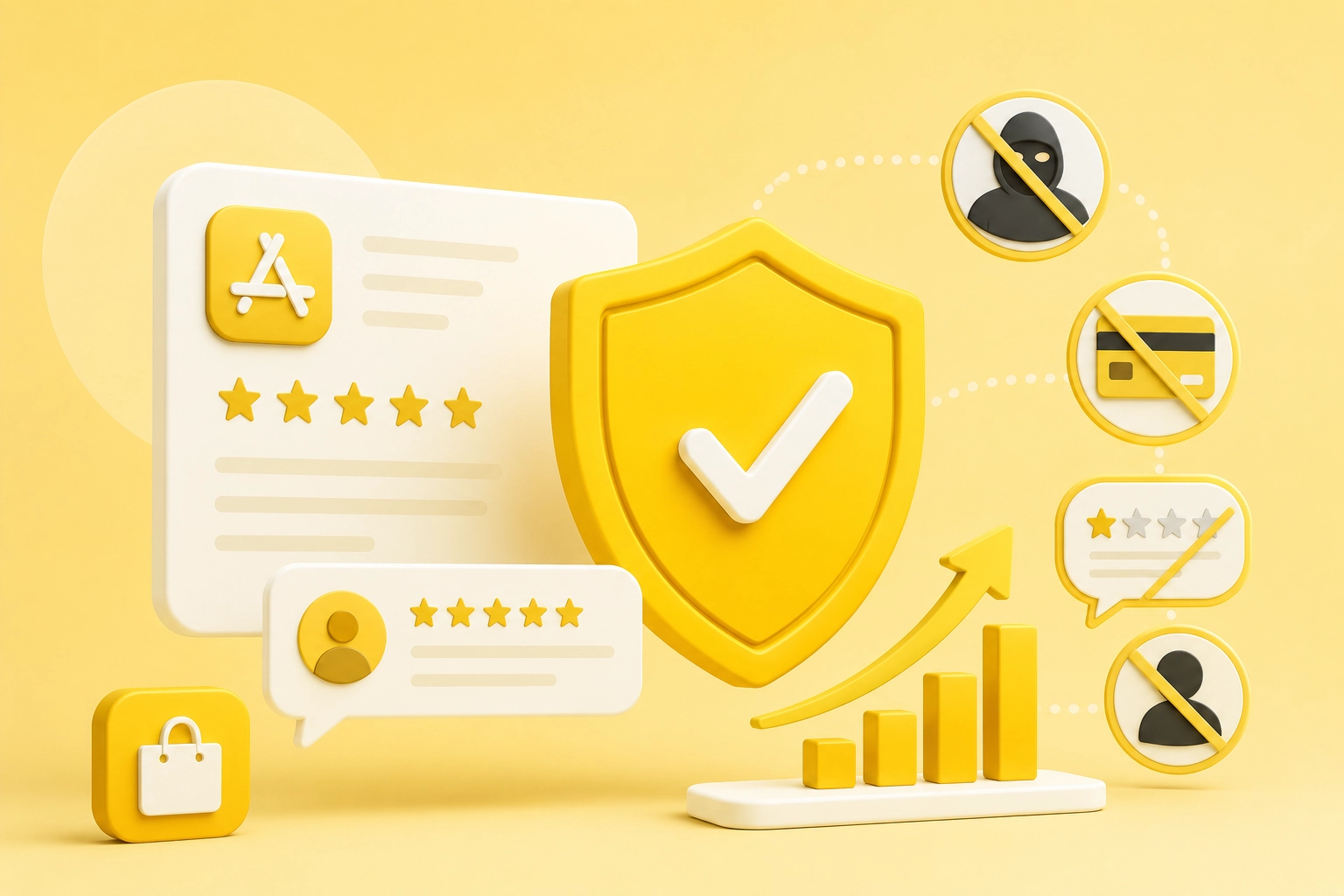 Apple says the App Store prevented more than $2.2 billion USD in potentially fraudulent transactions in 2025, part of a broader six-year total exceeding $11.2 billion. The figures, released just weeks before WWDC and amid ongoing regulatory pressure over App Store control in the US and Europe, reinforce Apple’s long-running argument: tighter platform restrictions create a safer ecosystem for users and developers alike. Whether critics agree with that framing or not, the report highlights something increasingly important for app teams: trust has become one of the most important growth metrics in mobile.
 In this overview you'll learn:
- The Scale of Fraud Apple Says It Prevented
- Fraud Now Extends Far Beyond Payments
- Why This Matters for Ratings and Reviews
- Trust Is Becoming a Product Strategy
- What App Teams Should Focus On
- Apple Is Also Making a Strategic Argument

Want to generate best-practice review replies in seconds?
Try Appbot AI Replies, free for 14 days →The Scale of Fraud Apple Says It Prevented
Apple says the App Store now serves more than 850 million weekly visitors across 175 storefronts.
According to Apple's latest report, the company:
- Prevented more than $2.2 billion in potentially fraudulent transactions in 2025.
- Rejected over 2 million risky app submissions.
- Blocked more than 1.1 billion fraudulent account creation attempts.
- Deactivated 40.4 million customer accounts linked to fraud or abuse.
- Permanently banned 193,000 developer accounts.
The figures are self-reported by Apple and not independently audited, though they align with the company’s broader positioning around App Store security, privacy, and ecosystem control.
Fraud Now Extends Far Beyond Payments
Modern App Store fraud is no longer limited to stolen credit cards or fake purchases.
It increasingly includes fake reviews, subscription scams, impersonation, cloned apps, bot-driven installs, incentivized ratings, and spam account networks. Apple specifically highlighted efforts to stop fraudulent reviews, chart manipulation, and abusive account behavior in its latest report.
For legitimate app developers, these problems create a hidden tax on growth. When users stop trusting App Store listings, ratings, or subscription flows, conversion suffers across the ecosystem, including for high-quality apps.
Why This Matters for Ratings and Reviews
As platforms crack down on manipulation, authentic user feedback becomes more valuable.
Ratings and reviews now influence far more than install decisions. They shape subscription trust, feature prioritization, support workflows, retention, and even investor perception in competitive categories.
Users have also become significantly more skeptical of polished App Store pages. Repetitive reviews, suspicious five-star spikes, and generic feedback patterns are easier to spot than they were a few years ago.
That means genuine customer sentiment is becoming a stronger competitive advantage.
For app teams, the implication is clear: the companies that respond quickly to customer pain points, especially around subscriptions, onboarding, bugs, and billing, are likely to build stronger trust signals over time.
Trust Is Becoming a Product Strategy
The most successful apps increasingly look trustworthy before users even open them.
That trust is built through:
- Transparent subscription pricing.
- Responsive support.
- Clear onboarding.
- Frequent updates.
- Honest release notes.
- Authentic review patterns.
Apple’s report reinforces the direction the ecosystem appears to be heading: platforms are placing greater emphasis on authenticity, transparency, and long-term user trust rather than short-term growth tactics.
That shift changes how product teams should think about customer feedback.
Support tickets, App Store reviews, and churn complaints are no longer just operational data points. They are trust signals that influence acquisition and retention.
App Reviews and Developer Replies Are Public Conversations
App Store reviews are no longer just about ratings. They are public conversations between companies and customers.
Potential users increasingly read developer replies before downloading an app, especially for subscription-based products. A thoughtful response to a billing complaint, bug report, or feature request can build more trust than dozens of generic five-star reviews.
Public app review replies help teams:
- Show responsiveness and accountability.
- Clarify misunderstandings around subscriptions or features.
- Demonstrate active product development.
- Reduce the impact of unresolved negative reviews.
- Build credibility with potential customers reading the thread later.
As users become more skeptical of manipulated ratings and fake engagement, authentic conversations between developers and customers are becoming increasingly important signals of trust and product quality.
What App Teams Should Focus On
Monitor Review Quality, Not Just Star Ratings
A high average rating matters less if reviews look outdated, repetitive, or suspicious.
Teams should pay closer attention to:
- Recurring complaints.
- Feature sentiment.
- Billing frustration.
- Support responsiveness.
- Sudden shifts in review velocity.
Patterns in customer feedback often reveal trust issues before traditional analytics dashboards do.
Reduce Subscription Friction
Many App Store complaints stem from confusing subscription experiences:
- Unclear trial messaging.
- Unexpected renewals.
- Difficult cancellation flows.
- Weak onboarding.
As Apple increases scrutiny around deceptive behavior, transparency becomes increasingly important for subscription-based apps.
Treat Customer Support as a Growth Function
App review replies and support conversations frequently surface issues related to trust before product metrics reflect them.
Users are often the first to notice:
- Suspicious charges.
- Login abuse.
- Spam activity.
- Broken purchase flows.
- Confusing UX patterns.
How customer support teams respond to those issues matters just as much as the issues themselves. Public review replies, support responses, and visible customer communication increasingly shape how potential users perceive an app’s trustworthiness.
The strongest product teams increasingly combine support insights, app review analysis, developer replies, and product analytics into a single feedback loop.
Watch Competitor Reviews Closely
Fraud crackdowns can reshape entire categories.
When lower-quality or deceptive apps lose visibility, competitors with stronger trust signals often gain momentum in rankings, ratings, and conversion.
Monitoring competitor app reviews can reveal:
- Unmet customer expectations.
- Recurring frustration patterns.
- Pricing concerns.
- Emerging feature gaps.
Apple Is Also Making a Strategic Argument
Apple’s fraud report is ultimately about more than blocked transactions. It is also about reinforcing the value of a tightly controlled App Store ecosystem. By publishing large-scale fraud prevention numbers, Apple is making the case that its review processes, payment systems, and platform policies play an important role in protecting users and developers from scams, abuse, and manipulation.
The report highlights how fraud now extends beyond stolen payment details into fake reviews, cloned apps, spam networks, account abuse, and deceptive subscription experiences. Apple is effectively arguing that large-scale platform oversight is necessary to manage those risks.
That argument has become increasingly important as regulators in the EU and US continue scrutinizing Apple’s App Store policies, commission structure, payment restrictions, and ecosystem rules. Apple’s approach has also become part of broader debates around platform control, competition, privacy, and security across the mobile ecosystem. Apple argues that tighter platform oversight helps reduce fraud, scams, spam, and abusive behavior across the App Store.
For developers, the debate matters because trust directly affects conversion, retention, subscriptions, and long-term customer relationships. A marketplace users trust is ultimately more valuable for legitimate apps trying to grow sustainably.
Whether regulators ultimately accept Apple’s balance between openness and control remains an open question.
Want to generate best-practice review replies in seconds?
Try Appbot AI Replies, free for 14 days →Where to from here?
- Discover effective strategies for app review management to efficiently handle and leverage user feedback.
- Unlock valuable insights into user sentiment with our powerful sentiment analysis tool for informed decision-making.
- Simplify your review tracking process with our efficient review aggregator, providing a centralized view of user feedback.
- Engage with your users effectively by crafting thoughtful responses with our convenient Reply to App Store Reviews feature.
About The Author

Claire is the Co-founder & Co-CEO of Appbot. Claire has been a product manager and marketer of digital products, from mobile apps to e-commerce sites and SaaS products for the past 15 years. She's led marketing teams to build multi-million dollar revenues and is passionate about growth and conversion optimization. Claire loves to work directly with the world's top app companies delivering tools to help them improve their apps. You can connect with her on LinkedIn.
Enjoying the read? You may also like these
 The New Era of App Discovery: What App Growth Teams Need to Know About ASO, SEO & AI
 App discovery is changing. Learn how ASO, SEO, and AI now work as one system—and how app copy, reviews, and release notes drive discovery.
Learn how Apple’s new Retention Messaging API helps reduce app subscription churn with personalized, in-the-moment messages. Backed by research, this guide shows how to combine App Store feedback, discounts, and smart messaging to boost retention.
A complete guide to App Store product page optimization in 2026 — custom product pages, A/B testing, and metadata that converts more installs.
What the new Apple and Google age-verification requirements mean for your app, and which APIs to use to comply without hurting the user experience.