

Appbot vs App Radar: Which App Review Tool Is Right for You?
Published 12th May, 2026 by Claire McGregor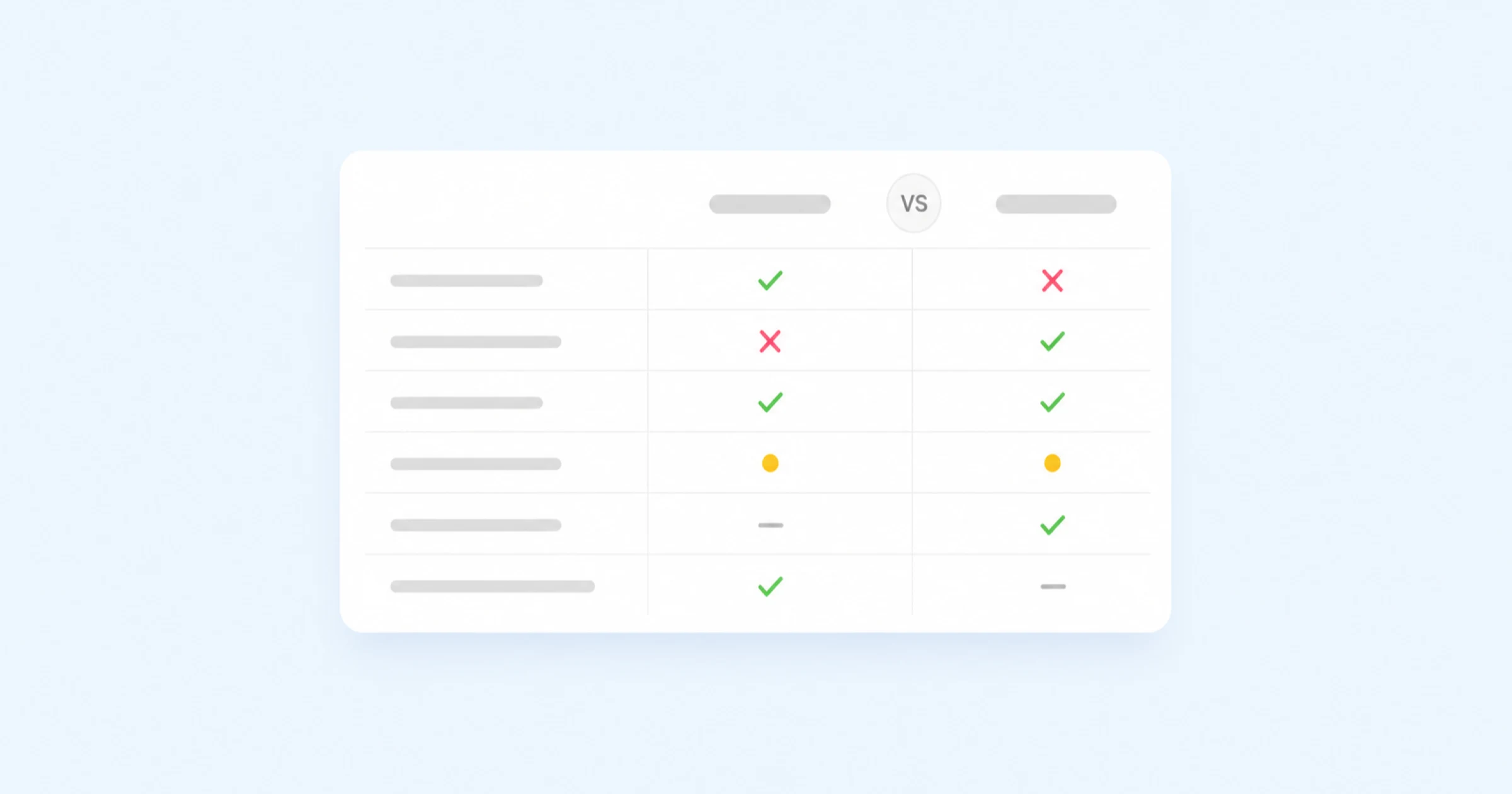 App Radar is a keyword and ASO platform, built to get your app found. Appbot is a review intelligence platform, built to understand what users say once they've found it. Here's how they compare on reviews.
 In this comparison you'll learn:
- The short version
- Appbot vs App Radar at a glance
- Different jobs: getting found vs being understood
- Reviews where your team already works
- Coverage: more stores, every country, full history
- Where App Radar is a genuinely good fit
- Frequently asked questions
Want to see what dedicated review intelligence looks like?
Join over 25% of the Fortune 100 and 35% of the top charting app developers using Appbot to monitor, analyze and reply to app reviews.
Try Appbot, free for 14 days →If you're comparing Appbot and App Radar, the most useful thing to know up front is that they're built to solve different halves of the same funnel. App Radar's centre of gravity is store search: keyword research, rank tracking and listing optimization to get your app discovered. Appbot's job starts the moment a user installs, turning the reviews and ratings that follow into sentiment, topics, replies and reporting your team can act on.
Both touch reviews, so they turn up in the same searches. But one treats reviews as a module inside an ASO product, and the other is built entirely around them. That difference is what this comparison is about.
The short version
Choose Appbot if reviews are where your decisions get made. You want the most accurate sentiment, topic and emotion analysis available, proprietary AI trained on 400M+ app reviews with a published 93%+ accuracy, plus unlimited replies, full review history from launch, coverage beyond iOS and Android, and feedback routed into Slack, Teams, Zendesk and your BI stack.
Choose App Radar if store search visibility is the job. You want keyword research with AI suggestions, daily rank tracking, and store listing and release-note management for iOS and Google Play, or you'd like a managed-services team to run ASO and Apple Search Ads for you. Review management is included, but it's a module in an ASO product.
Appbot vs App Radar at a glance
Based on publicly available information as of July 2026. Always verify current details with each vendor.
| Feature | Appbot | App Radar |
|---|---|---|
| Core focus | Review & ratings intelligence, purpose-built for monitoring, analyzing and replying to reviews | ASO & keyword optimization, with review management included |
| Sentiment analysis AI | Proprietary, trained on 400M+ app reviews; published 93%+ accuracy for sentiment, topics, keywords and emotions on every review | AI review summaries & tagging; no published accuracy benchmark for app review sentiment |
| Review replies | Unlimited on every plan, with AI drafts, auto-reply rules and canned replies included | AI-assisted, GPT-powered replies; allowances vary by plan |
| Reply from your tools | Slack, Zendesk, Freshdesk, Teams, Salesforce and more; replies post back to the store automatically | Primarily in-app; Slack integration for alerts, helpdesk reply integrations not a focus |
| Store coverage | Apple App Store (iOS & macOS), Google Play and Microsoft Store, every country, from day one | Apple App Store & Google Play (iOS and Android focus) |
| Historical review data | Full backfill from app launch, complete review history available on signup | Strong on keyword/ranking history; review backfill not a published focus |
| Competitor tracking | Full review-level analysis; competitor apps count as sources within plan limits, with the same sentiment & topic AI as your own apps | Included, oriented to keyword rankings and store performance, with review summaries |
| Keyword rank tracking (ASO) | Not a focus; Appbot analyzes review language, not store search rankings | Core strength: keyword research, AI suggestions, daily rank tracking, listing management |
| Managed services | Self-serve platform, built so your own team is up and running in ~5 minutes | Available, agency-style ASO and Apple Search Ads services alongside the tool |
| Language coverage | 200+ languages analyzed natively, auto-translated to English with the original always preserved | Multi-language localization tools oriented to store listings |
| Pricing model | Priced by sources (an app in a store = one source), with a 14-day free trial | Tiered plans, published entry plans from ~€58/mo at time of writing; free trial available |
App Radar details sourced from App Radar's public materials and third-party review sites, July 2026. App Radar is a trademark of its respective owner.
Different jobs: getting found vs being understood
App Radar's centre of gravity is store search: keyword research, AI keyword suggestions, daily rank tracking and listing management. That's the "getting found" half of app growth, and it's genuinely App Radar's home turf.
Appbot's job starts the moment a user installs. Every review is classified by sentiment, topic, keyword and emotion by a proprietary AI trained on 400M+ app reviews, the engine behind our published 93%+ accuracy. That depth is what turns reviews into roadmap decisions, bug alerts and rating lifts.
In an ASO product, review analysis is one module competing for roadmap attention with keywords, ads and listings. When review insight is what your product, support and exec teams run on, the specialist matters.
Reviews where your team already works
Review management only saves time if it fits how your team actually operates. Appbot routes reviews, filtered by rating, sentiment, topic or keyword, into Slack, Microsoft Teams, Zendesk, Freshdesk, Jira, Salesforce and more, and lets support teams reply from those tools, with every response posting back to the App Store or Google Play automatically.
Add unlimited replies on every plan, dashboards for stakeholders, and a full REST API plus Tableau connector for your data team, and reviews stop being something one person checks in one app.
App Radar offers Slack alerts and in-app AI replies; a deep helpdesk and BI integration layer isn't its focus.
Coverage: more stores, every country, full history
Appbot collects reviews from the Apple App Store (iOS and macOS), Google Play and the Microsoft Store, from every country each store operates in, automatically, with your complete review history backfilled the moment you sign up. Reviews in 200+ languages are analyzed natively and auto-translated to English with the original preserved.
App Radar concentrates on iOS and Google Play, which fits its ASO mission, store search optimization is an iOS/Android game. But if your portfolio includes desktop apps, or your decisions depend on years of review history and market-by-market sentiment comparison, breadth of coverage is where a review-first platform earns its keep. See our text analysis tools for the full picture on multi-language review analysis.
Where App Radar is a genuinely good fit
If your bottleneck is store search visibility, App Radar is built for exactly that: keyword research with AI-powered suggestions, daily rank tracking, competitor keyword analysis, and store listing and release-note management for iOS and Google Play. Its managed-services option, where App Radar's team runs ASO and Apple Search Ads for you, is also something Appbot deliberately doesn't offer; we're a self-serve platform your own team runs.
The two tools solve different halves of the same funnel, which is why some teams run both: App Radar to get found, Appbot to understand, reply and improve once users arrive. If reviews are where your roadmap, support workflow and reporting live, that's the job Appbot is built for, and the 14-day trial backfills your full review history so you can judge it on your own data.
Frequently asked questions
What's the main difference between Appbot and App Radar?
App Radar is an app store optimization platform, keyword research, rank tracking and store listing management for iOS and Google Play, with review management included and optional managed ASO services. Appbot is a review and ratings intelligence platform: proprietary AI trained on 400M+ app reviews for sentiment, topic and emotion analysis, unlimited AI-assisted replies, full review history, and deep helpdesk, Slack, Teams and BI integrations. One is built to get your app found; the other to act on what users say after they've found it.
Which tool has better review sentiment analysis?
Appbot publishes a 93%+ sentiment accuracy figure, achieved with a proprietary model trained solely on app review data, including emoji, sarcasm and abbreviations, and analysis runs in the review's original language across 200+ languages. We're not aware of a published app-review sentiment accuracy benchmark from App Radar, so the fairest test is to run both on your own reviews during a trial and check the classifications yourself.
How does pricing compare?
Appbot prices by sources (an app in a store = one source) with a 14-day free trial and unlimited replies on every plan. App Radar publishes tiered plans, with entry plans listed from around €58/month at time of writing, plus custom and managed-service options. Because the models differ, compare based on your app count, review volume and whether you need ASO features or services in the bundle.
Can I use Appbot and App Radar together?
Yes, and teams do, the tools barely overlap. App Radar covers store search visibility (keywords, rankings, listings), while Appbot covers review intelligence (sentiment, topics, replies, alerts, reporting). Appbot's review language analysis can even feed your ASO work in App Radar: the words users naturally use in reviews are strong candidates for the keywords worth targeting.
Can I migrate from App Radar to Appbot?
There's nothing to migrate in the usual sense: connect your App Store and Google Play accounts and Appbot backfills your complete review history automatically, so trends and benchmarks are intact from day one. Reply connections and integrations like Slack, Teams and Zendesk each take a few minutes to set up. If you keep App Radar for ASO, nothing about running both conflicts.
Does Appbot track keyword rankings like App Radar?
No, Appbot doesn't track store search keyword positions. Appbot analyzes the language inside reviews (yours and your competitors'), which many teams use to inform ASO: recurring phrases in positive reviews make strong listing keywords and screenshot callouts. For rank tracking itself, a dedicated ASO tool like App Radar is the right instrument.
Want to see what dedicated review intelligence looks like?
Join over 25% of the Fortune 100 and 35% of the top charting app developers using Appbot to monitor, analyze and reply to app reviews.
Try Appbot, free for 14 days →Where to from here?
- Discover effective strategies for app review management to efficiently handle and leverage user feedback.
- Unlock valuable insights into user sentiment with our powerful sentiment analysis tool for informed decision-making.
- Benchmark your app against rivals with competitor review analysis to find product gaps and opportunities.
- Engage with your users effectively by crafting thoughtful responses with our convenient Reply to App Store Reviews feature.
About The Author

Claire is the Co-founder & Co-CEO of Appbot. Claire has been a product manager and marketer of digital products, from mobile apps to e-commerce sites and SaaS products for the past 15 years. She's led marketing teams to build multi-million dollar revenues and is passionate about growth and conversion optimization. Claire loves to work directly with the world's top app companies delivering tools to help them improve their apps. You can connect with her on LinkedIn.
Enjoying the read? You may also like these
 The Best App Review Management Tools in 2026
 Not every tool that shows up when you search app review management actually does it. Here's how Appbot, AppFollow, AppTweak, Sensor Tower and others actually differ.
Analyze competitor app reviews to uncover feature requests, user frustrations, product gaps, and growth opportunities. Learn how top mobile teams turn competitor feedback into competitive advantage.
In this post we share insights from 9 years working in the sentiment analysis to help you ask the right questions and choose the best sentiment tool for you.
The complete guide to app store review analysis to help app developers improve their app, boost their star ratings and drive higher downloads and revenue.